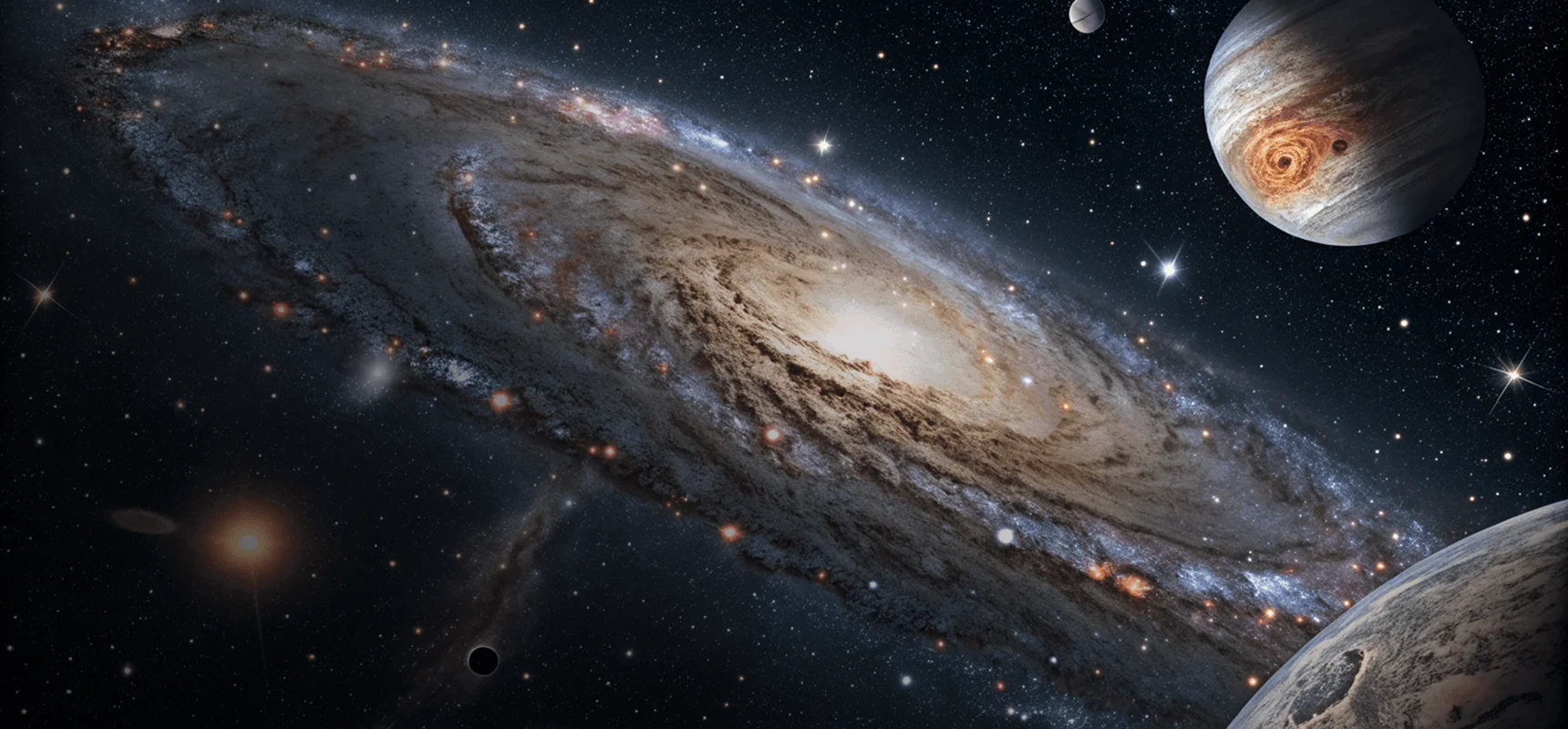
Guide to the Universe
- Космос, Наука
- 24 episodes
- 2017-2025
How far have we really advanced in studying space? What technologies do we actually possess? Will we ever find a new home in the Universe? Astronomer Vladimir Surdin answers these and other questions.
Hosts


Episodes
Космические облакаno EN translation Dubbing on request
Guide to the Universe • 2025 • 26 minutes
Где в космосе летают бабочка и голова ведьмы? Какие туманности можно увидеть невооружённым глазом? И может ли в молекулярных облаках зародиться жизнь? Об этом и многом другом Дмитрий Побединский расскажет в очередном выпуске «Путеводителя по Вселенной».
Black Holes Dubbing on request
Guide to the Universe • 2025 • 26 minutes
<html>Is it possible to travel through black holes? How are these cosmic monsters structured? And when did active galactic nuclei originate? Dmitry Pobedinsky discusses this and much more in this episode of <i>Guide to the Universe</i>.</html>

Mega Telescopes Dubbing on request
Guide to the Universe • 2025 • 26 minutes
What is the new Vera Rubin Observatory capable of? Why are astronomers building unbelievably large telescopes in Chile? And what corners of the Universe do astronomers hope to peer into with them?
Extraordinary Galaxies Dubbing on request
Guide to the Universe • 2025 • 26 minutes
<html>Could galaxies exist without stars and supermassive black holes? What happens when enormous stellar conglomerates collide? How did galaxies similar to <i>the Target</i> and <i>the Cartwheel</i> form? And where in space do<i> the Medusa</i> and <i>the Tadpole </i>float? Dima Pobedinsky tells you about this and much more in this episode of the <i>Guide to the Universe</i> project.</html>
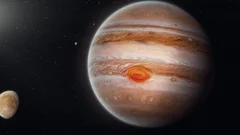
Satellites of Jupiter Dubbing on request
Guide to the Universe • 2025 • 26 minutes
<html>Which of Jupiter’s moons have subsurface oceans? Could life exist in them? What do Ganymede’s ocean and a sandwich have in common? Which of the gas giant’s moons doesn’t sink in water? How did Jupiter capture asteroids to turn them into its moons? And why are many of them temporary? We cover it all in this episode of the <i>Guide to the Universe</i> project with Dima Pobedinsky.</html>
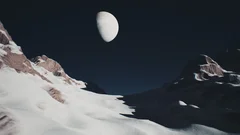
The Amazing Moons of Saturn Dubbing on request
Guide to the Universe • 2025 • 26 minutes
<html>Where in the Saturn system can you find a walnut, a dumpling, and two eggs? Where did the geysers on Enceladus that shoot to 800 kilometers come from? And is it possible that life is thriving in Titan’s seas? Dmitry Pobedinsky talks about this and much more in this episode of <i>Guide to the Universe.</i></html>
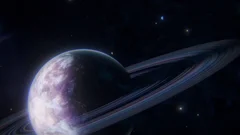
Space Monsters Dubbing on request Subtitles available (Russian)
Guide to the Universe • 2024 • 26 minutes
<html>Where do monstrous quasars originate? Why do they produce deadly jets? And how do quasars assist the work of the navigation system in your phone? All this and more in this episode of <i>Guide to the Universe</i> with Dmitry Pobedinsky.</html>
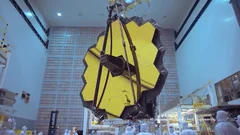
Finding Life Dubbing on request Subtitles available (Russian)
Guide to the Universe • 2024 • 26 minutes
<html>How do scientists find planets around distant stars? Is it true that signs of life have already been found on one of them? And what new telescopes are being built to search for habitable worlds? All of this and much more in this episode of <i>Guide to the Universe </i>with Dmitry Pobedinsky.</html>
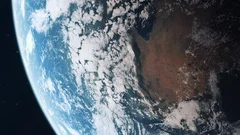
Extraordinary Stars Dubbing on request Subtitles available (Russian)
Guide to the Universe • 2024 • 26 minutes
<html>Do stars exist that are 2,000 times larger than the Sun? How massive can blue supergiants be? And how can a neutron star end up at the center of an ordinary star? Dmitry Pobedinsky answers these and many other questions about stars in this episode of <i>Guide to the Universe</i>.</html>
Where Do Aliens Live? Dubbing on request Subtitles available (Russian)
Guide to the Universe • 2024 • 26 minutes
<html>How do scientists search for extraterrestrial civilizations? Is it possible to send a message to the galactic chat? And what risks does meeting aggressive aliens pose to us? Dmitry Pobedinsky discusses these and many other questions in this episode of <i>Guide to the Universe.</i></html>
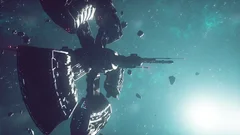
Interstellar Travel Dubbing on request Subtitles available (Russian)
Guide to the Universe • 2024 • 26 minutes
<html>What will a ship for interstellar travel look like? Will the first starship passengers be humans or robots? And how long will a journey to Proxima Centauri take using a fusion drive, nuclear tug, or a ship with a photon engine? Dmitry Pobedinsky discusses this and much more in this episode of <i>Guide to the Universe</i>.</html>
The End of the World Dubbing on request Subtitles available (Russian)
Guide to the Universe • 2023 • 26 minutes
<html>Dark energy is the most powerful and, at the same time, the most mysterious substance in the universe. It behaves like antigravity — instead of attracting, dark energy repels space, causing it to expand at an accelerating rate. What does this invisible force governing the cosmos look like? And why will our world ultimately perish because of dark energy? In the new episode of <i>Guide to the Universe</i>, Dmitry Pobedinsky attempts to answer a whole range of questions about the nature of this puzzling phenomenon. </html>
The Dark Side of the Universe Dubbing on request Subtitles available (Russian)
Guide to the Universe • 2023 • 25 minutes
Dark matter neither emits nor reflects light. No one can definitively determine what this hypothetical substance looks like or what it is made of. Yet, it governs the motion of stars and galaxies. What particles make up this mysterious dark matter? Why must scientists venture deep underground to detect them? And what role does this enigmatic substance play in the Big Bang theory? In the new episode of Guide to the Universe, physicist and popular blogger Dmitry Pobedinsky attempts to answer a whole range of questions about this invisible matter.
Anomalies Dubbing on request Subtitles available (Russian)
Guide to the Universe • 2023 • 26 minutes
<html>The universe is wondrous and vast. We still know very little about it. That’s why some of its anomalies seem mysterious, if not mystical. Where did a cross and a ring of fire appear in space? Is it true that the Solar System is being sucked into a gravitational well? And why did aliens clear out the Boötes Void? In the new episode of <i>Guide to the Universe,</i> Dmitry Pobedinsky invites you on a journey through its strangest corners.</html>
Cosmic Wanderers Dubbing on request Subtitles available (Russian)
Guide to the Universe • 2023 • 26 minutes
<html>Cosmic wanderers—asteroids and comets that, like bullets, fly from one star system to another. They often appear unexpectedly and can unleash catastrophe on Earth. Interestingly, it’s not only small bodies that drift through space; entire planets, stars, and even overwhelmingly powerful black holes can one day enter our Solar System. So, would this be the end of us? Or not? In the new episode of <i>Guide to the Universe,</i> physicist and well-known blogger Dmitry Pobedinsky explores just how truly dangerous visitors from deep space are.</html>
Space Navigation Dubbing on request Subtitles available (Russian)
Guide to the Universe • 2023 • 26 minutes
<html>Our spacecraft have long traversed the expanses of the universe. Some have even managed to go beyond the Solar System. We have successfully landed robotic probes on Mars, the Moon, and Venus. But here's the paradox: humanity still hasn’t learned how to determine a spacecraft’s exact position in deep space, and we don’t yet know how to control them over large distances. Yet, we aspire to become an interstellar species and colonize Earth-like planets! Must we abandon these grand plans? Keep calm — it can be fixed! In the new episode of <i>Guide to the Universe</i>, physicist and popular blogger Dmitry Pobedinsky discusses new instruments that will keep cosmonauts from getting lost on the dusty trails of distant worlds.</html>
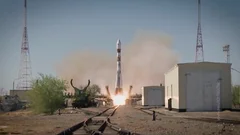
Rocket Engines of the Future Dubbing on request Subtitles available (Russian)
Guide to the Universe • 2018 • 26 minutes
<html>Modern rocket engines are effective at getting hardware into orbit but are entirely unsuitable for long-duration space travel. For decades, scientists have been working on alternative propulsion systems capable of accelerating spacecraft to record speeds. Projects involving electric, ion, and plasma engines already exist, and a long-term goal is to develop an antimatter engine. We cover all of these topics in the new episode of <i>Guide to the Universe</i>.</html>
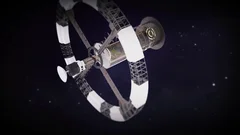
Surviving in Space Dubbing on request Subtitles available (Russian)
Guide to the Universe • 2018 • 26 minutes
<html>Humanity faces many threats: global warming and cooling, supervolcanic eruptions, geomagnetic pole reversals and changes in solar activity. Plus, we must not forget asteroids and comets. Our cradle — Earth — proves very fragile against cosmic-scale forces. One could create an artificial habitat on Earth, hide under a dome of super-strong glass or some future nanomaterial. But more and more scientists say humanity should begin leaving Earth in the near future to avoid extinction. What awaits us beyond the atmosphere? Watch our programme <i>Guide to the Universe</i>.</html>
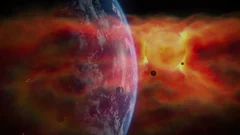
Solar Storm Dubbing on request Subtitles available (Russian)
Guide to the Universe • 2018 • 25 minutes
Dangers to humanity lurk not only in deep space. The Sun, which provides our mild, comfortable climate, can also pose a threat to our existence. In a billion years, the Sun will become so bright that Earth's temperature will rise by 40 degrees. In three billion years, humanity will not be able to survive—even underground in bunkers. And even now, we cannot afford to be off guard.
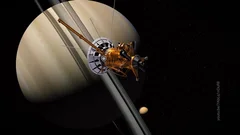
Is There Life in the Solar System? Dubbing on request Subtitles available (Russian)
Guide to the Universe • 2018 • 25 minutes
At the dawn of the telescope era it was widely believed that life existed on other planets of the Solar System. But with the space age, robotic probes found conditions on planets like Venus and Mars to be hostile. Many scientists began to deny the possibility of life elsewhere in the Solar System. However, over the past 30 years extremophile microorganisms have been discovered that can survive temperatures up to 122°C, in ice, on the ocean floor, and even on the exterior of the ISS in vacuum conditions.