Scientific Sensations
- Наука
- 76 episodes
- 2019-2026
Stay informed about the highest achievements of modern science! This series covers sensational scientific discoveries of our time — breakthroughs that change people's understanding of the world and, in the long run, human life. High relevance of the achievements presented in the series is its principle feature.
play_arrow TrailerEpisodes
Цифровой джиннno EN translation Dubbing on request
Scientific Sensations • 2026 •
Нейросети сегодня стали частью ежедневной рутины. Но как у любой серьёзной технологии, у искусственного интеллекта есть две стороны. На светлой – колоссальные возможности, на тёмной – невиданные доселе риски. Правда ли, что чат-боты могут свести человека с ума и даже довести до самоубийства? Как себя ощутил искусственный интеллект, когда обрёл физическое тело? И к чему может привести тотальное очеловечивание нейросетей?
Космологическая постоянная? no EN translation Dubbing on request
Scientific Sensations • 2026 •
Альберт Эйнштейн называл космологическую постоянную главной ошибкой в своей жизни. Но великий физик оказался неправ. В конце ХХ века учёные доказали, что он зря выкинул «лямбду» из уравнений. А современные исследователи внезапно обнаружили, что космологическая постоянная может оказаться совсем не постоянной, а переменной. Что за чудовищная сила раздувает Вселенную, как мыльный пузырь? Почему учёные говорят, что это давление тёмной энергии? Как изучать то, что невозможно увидеть ни в один прибор? И какие телескопы должны помочь учёным определить параметры тёмной энергии?
Квантовое превосходствоno EN translation Dubbing on request
Scientific Sensations • 2026 •
Как программируют устройства, принцип действия которых нельзя даже вообразить? Что шумит в квантовом компьютере? Как учёные пытаются это исправить? И почему хакеры только и ждут момента, когда квантовые машины научатся решать практические задачи? Об этом и многом другом расскажем в фильме из цикла «Научные сенсации».
Спектры Вселеннойno EN translation Dubbing on request
Scientific Sensations • 2026 •
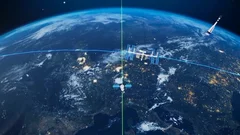
Мало кто об этом знает, но у нашей страны есть собственная серия космических обсерваторий под названием «Спектр». Она включает в себя как минимум шесть телескопов, три из которых были задуманы ещё во времена СССР. Какие научные сенсации уже сотворили обсерватории «Радиоастрон» и «Спектр-РГ»? Когда на орбите Земли заработает «русский Хаббл»? И каким будет наш ответ «Джеймсу Уэббу» – новый телескоп «Миллиметрон»?
В одиночку не прожить!no EN translation Dubbing on request
Scientific Sensations • 2026 •
Почему без симбиоза мы все оставались бы бактериями? За что клетку – предшественницу всех животных, растений и грибов – назвали в честь древнего бога лжи? К чему могут принудить нас простейшие паразиты? И кто на самом деле управляет нашим психическим здоровьем? Об этом и многом другом расскажем в этой серии проекта «Научные сенсации»

Средиземное море - колыбель цивилизацийno EN translation Dubbing on request
Scientific Sensations • 2026 •
Чем уникальна геологическая история Средиземного моря? Как на месте гигантского водоёма образовалась мегапустыня? Почему именно в Средиземноморье учёные ищут следы мифической Атлантиды? Могла ли ею оказаться минойская цивилизация, возникшая на древнем Крите? Какую роль в её гибели сыграл вулкан? И что за чудища по ночам поднимаются из морской пучины?
Охотское море - кладовая природыno EN translation Dubbing on request
Scientific Sensations • 2026 • 43 minutes
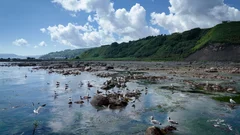
Почему в Охотском море стремительно сокращается ледовый покров? Может ли глобальное потепление оставить нас без красной рыбы? Как молодь лосося помогает охотоморским китам набирать вес? И зачем на Сахалине строят новую биостанцию? Об этом и многом другом расскажем в фильме из цикла «Научные сенсации».
Разум без словno EN translation Dubbing on request
Scientific Sensations • 2026 • 44 minutes
Биороботы, которые живут одними только инстинктами, – вот как порой называют животных. Однако каждый муравей, птица или рептилия – это не только набор инстинктов. Последние исследования говорят: животные способны решать сложные когнитивные задачи и даже обладают самосознанием. В этом выпуске не только расскажем об этих научных работах, но и покажем удивительные эксперименты, которые доказывают наличие у братьев наших меньших настоящего ума.
Море, рвущее шаблоны, - Красное мореno EN translation Dubbing on request
Scientific Sensations • 2025 • 44 minutes
Бронзовый век в истории человечества мог начаться только на этих берегах. Тут же работает эволюционная лаборатория, которая моделирует ситуацию на других планетах. Совсем рядом зародился и наш вид – человек разумный. Именно в этом месте столкнулись Древний Египет, Рим, Индия и загадочные цивилизации Африки. Этому морю посвящён один из известнейших сюжетов Библии... Но на самом деле, это вообще не море. А что же тогда?.. Узнаете, посмотрев фильм из цикла «Научные сенсации» на телеканале «Наука». У вас не останется сомнений: Красное море рвёт все шаблоны!

Огненное кольцо Землиno EN translation Dubbing on request
Scientific Sensations • 2025 • 43 minutes
В июле 2025 года у побережья Камчатки произошло разрушительное землетрясение. Оно вызвало тревогу у жителей всего Тихоокеанского региона. Волны цунами достигли берегов Японии и Аляски. Учёные уверены: это далеко не последний катаклизм такой силы. В Японии ждут землетрясение, которое способно стереть страну восходящего солнца с лица Земли! Причём, вероятность катастрофы достигает 90%! Землетрясение на Камчатке и неутешительные прогнозы из Японии напоминают: мы живём на краю гигантской тектонической «пороховой бочки» – Тихоокеанского огненного кольца. Почему здесь постоянно происходят столь мощные землетрясения? Можно ли предсказать следующий удар стихии? И способно ли человечество не только выжить в этом огненном кольце, но и использовать его колоссальную энергию во благо?

The Siliness of Life Dubbing on request
Scientific Sensations • 2025 • 43 minutes
Why does a person have an appendix that constantly becomes inflamed? What about extensive stretches of chromosomes that contain no genes? Is the need to sleep for all creatures with a nervous system an evolutionary flaw? Why did the peacock "accidentally" develop its magnificent tail, which only hinders its survival? It seems that natural changes often occur irrationally, and life frequently makes new and seemingly foolish choices. But is that really the case? What else must we understand about traits in living organisms that appear pointless? And how is our extra “junk DNA” already helping to fight incurable diseases today?

Secrets of the White Sea Dubbing on request
Scientific Sensations • 2025 • 43 minutes
<html>How do scientists and divers uncover the mysteries of the White Sea’s inhabitants? Why is it called the White Sea? Which ancient artists decorated the shores of this body of water with petroglyphs? Who built the mysterious stone labyrinths on the Solovetsky Islands? We explore all this and more in this film from the <i>Scientific Sensations</i> series.</html>
Plant Vision Dubbing on request
Scientific Sensations • 2025 • 43 minutes
<html>Is it true that plants can see, hear, and remember information? How do flowers conduct reconnaissance and organize military campaigns? And how might research into plant senses change our future? We explore these questions and more in this film from the <i>Scientific Sensations </i>series. </html>
Reverse Engineering Dubbing on request
Scientific Sensations • 2025 • 44 minutes
How does reverse engineering help inventors? Why is reverse design needed in IT? How are digital twins used in industry and science? And can a virtual model protect an object from breakdowns and accidents?
The Most Accurate Time and How to Use It Dubbing on request
Scientific Sensations • 2025 • 44 minutes
<html>Why is it impossible to rely on Earth’s rotation parameters when determining precise time? Which instruments based on atomic clocks can determine the position of a ladybug in a meadow within a coordinate system the size of billions of light years? A unique isotope — thorium-229 — has allowed scientists to design a device called a nuclear clock. It will be 100,000 times more accurate and reliable than the best modern atomic clocks. With it, we could prospect for minerals, search the Universe for mysterious dark matter, and even build a navigation system without any satellites. How is all this possible? Watch the film <i>The Most Accurate Time, and How to Use It</i> from the <i>Scientific Sensations</i> series on the Science channel!</html>
A World Without Bees Dubbing on request Subtitles available (Russian)
Scientific Sensations • 2025 • 43 minutes
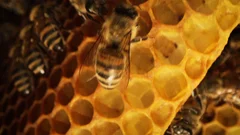
Bees have begun disappearing worldwide. Agricultural chemicals and microscopic natural killers contribute to this. Can bee populations still be saved? Or is the world on the brink of catastrophe? Is it true that the loss of these insects will lead to famine and the demise of humanity? And what measures are scientists taking to protect these furry workers here and now?
Collision of Galaxies Dubbing on request
Scientific Sensations • 2025 • 43 minutes
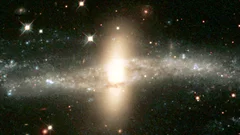
How did the James Webb Telescope manage to look into the epicenter of a galaxy collision? Why do such catastrophes trigger bursts of star formation? What force tears apart entire stellar systems? And what will happen to the Solar System when the Andromeda Nebula crashes into our Galaxy?
Forgetting to Remember Dubbing on request
Scientific Sensations • 2025 • 43 minutes
<html>Why do some memories fade quickly while others are imprinted for life? How does forgetting work at the cellular level? And why can errors in this process fundamentally disrupt our ability to think? The tool the brain uses to remove unnecessary connections between neurons — synaptic pruning — is key to answering these questions. Scientists have discovered that this targeted process can help in studying severe conditions such as autism, schizophrenia, and Alzheimer’s disease. How scientists combat incurable illnesses and what role artificial intelligence may play in this field of work is explored in this episode of <i>Scientific Sensations.</i></html>

Supercontinent Dubbing on request
Scientific Sensations • 2025 • 44 minutes
In 250 million years our planet will be unrecognizable… All the continents will come together into a new supercontinent. What natural disasters will accompany its formation? Why do scientists predict a very harsh climate on the future supercontinent? And is it true that its era will be the darkest period for life on Earth?
Space Settlements Dubbing on request Subtitles available (Russian)
Scientific Sensations • 2024 • 43 minutes
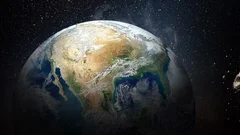
<html>Will humanity succeed in building settlements on other planets? Which lunar base projects are most viable? How can space settlers be protected from radiation? How realistic is it to create artificial gravity? How can potatoes be grown on Mars? And is reproduction possible in space conditions? We explore these questions in this episode of the <i>Scientific Sensations</i> series.</html>