
Chemistry
- Наука
- 45 episodes
- 2018-2025
Chemistry — a science known to everyone from school yet unclear to most since then. We tell of different chemical elements in an accessible way, the history of their discovery, and their role in human life. Each episode follows the principle of 'one episode, one element.' Expect fascinating experiments!
Hosts

Episodes
Карбоновые кислотыno EN translation Dubbing on request
Chemistry • 2025 • 25 minutes
Мыло, маринованные овощи и шашлык, лёгкая и воздушная выпечка, биоразлагаемые пакеты и импланты, БАДЫ с ОМЕГА-3 и ОМЕГА-6. Всё это – лишь малая часть того, где можно встретить вещества, химические свойства которых разберём в этом выпуске. Относятся они к одному классу органических соединений. Объединяет их и то, что все они обладают кислотными свойствами и являются производными углеводородов, в молекулах которых есть одна или несколько карбоксильных групп.
Entertaining Experiments Dubbing on request
Chemistry • 2025 • 26 minutes
There is a time for work and a time for play. This proverb perfectly captures the atmosphere in a chemistry laboratory. Scientists spend their days conducting serious research — important yet often seemingly dull. However, sometimes they remember that chemistry can be spectacular and beautiful, and they perform impressive experiments — especially since the necessary reagents are already at hand. In this episode, we step away from complex topics to carry out a dozen or so entertaining experiments.

Gases Dubbing on request
Chemistry • 2025 • 26 minutes
Gases surround humans everywhere. Yet, people didn’t recognize them right away, mainly because most gases are invisible. The study of gases began only in the 17th century, and a dedicated branch of science pneumatic chemistry — was even created for it. In this episode, we discuss the development of gas research, its history, and the properties of gases.
Selenium and Tellurium Dubbing on request
Chemistry • 2025 • 26 minutes
The elements discussed in this episode — along with oxygen and sulfur — are called chalcogens, from the Greek for “ore-forming”. While oxygen and sulfur do form deposits of oxides and sulfides, our subjects typically appear in those ores as impurities. In the periodic table, they are in group 16, where oxygen and sulfur also sit, along with the radioactive polonium and the artificially produced livermorium — though these are usually studied separately. In this episode, we focus on selenium and tellurium, exploring their production, uses, and chemical properties.
Polymers Dubbing on request
Chemistry • 2025 • 26 minutes
Stone, bronze and iron — these materials once helped humans tame nature and make life more comfortable. It’s no wonder whole eras are named after them. Which century are we living in? To understand that, just look around. Most things today are made of plastic and other polymers. But what exactly are they?
Amazing Experiments Dubbing on request Subtitles available (Russian)
Chemistry • 2024 • 26 minutes
Amid their routine, scientists sometimes forget that chemistry is a truly spectacular and beautiful science. In this episode, we step away from serious topics and simply perform a dozen entertaining experiments. Among these, viewers will see the Egyptian night and pharaoh’s snakes, learn the recipe for hot ice, and discover ways to create volcanoes and firestorms. Of course, all of this comes with explanations of what is happening from a chemical perspective.
Ethanol and Other Primary Alcohols Dubbing on request Subtitles available (Russian)
Chemistry • 2024 • 26 minutes
All the subjects of this episode belong to a single class of organic compounds. The most famous member of this class is found in every alcoholic beverage — it’s commonly called “alcohol”. However, for chemists, it is a large and diverse group of substances. What unites them is that they are essentially derivatives of hydrocarbons in which one or more hydrogen atoms are replaced by hydroxyl groups. In this programme, we examine their properties.

Reaction Rates Dubbing on request Subtitles available (Russian)
Chemistry • 2024 • 25 minutes
Why do some substances react with each other in a flash while others react extremely slowly? What determines the speed of a chemical interaction? Is there a way to influence it? In this episode, we not only answer these questions but also build several versions of chemical clocks and find out whether it’s possible to measure time using chemistry.
Water Dubbing on request Subtitles available (Russian)
Chemistry • 2024 • 26 minutes
The substance discussed in this episode is well known to everyone. Without it, human life — like with oxygen — would be impossible, not least because our bodies are composed of approximately 70 percent of this compound. It is also the only substance on Earth naturally present in all three states of matter: solid, liquid, and gas. A molecule of this substance contains two hydrogen atoms and one oxygen atom, so it could be called hydrogen oxide. Its chemical formula is H₂O. Here, we examine its chemical properties and learn what makes this compound unique.
Arsenic, Antimony, Bismuth Dubbing on request Subtitles available (Russian)
Chemistry • 2024 • 26 minutes
The elements discussed here have been known to people since ancient times. In the periodic table, they sit in Group 15, alongside nitrogen and phosphorus. They were once considered metals and were primarily used in various alloys — for example, in the manufacture of weapons and cookware. Today, these elements are classified as metalloids because they exhibit both metallic and nonmetallic properties. We are talking about the arsenic subgroup, which also includes antimony and bismuth. In this episode, we tell you about their properties.
Oxygen Dubbing on request Subtitles available (Russian)
Chemistry • 2018 • 26 minutes
<html>In the <i>Chemistry </i>series, we describe the chemical properties of simple substances through curious experiments. This episode is dedicated to the properties of oxygen and its applications in everyday life.</html>

Nitrogen Dubbing on request
Chemistry • 2018 • 26 minutes
<html>In the <i>Chemistry </i>series, we describe the chemical properties of simple substances through curious experiments. This episode is dedicated to the properties of nitrogen and its applications in everyday life. </html>

Electrochemistry in a Glass Dubbing on request Subtitles available (Russian)
Chemistry • 2023 • 25 minutes
In this episode, we conduct experiments with electricity. Some may think we’ve come to steal ideas from physicists, since experiments involving current are more often demonstrated by them. However, sometimes it’s easier to explain what’s happening from a chemistry perspective. Essentially, electricity sits at the intersection of two sciences — physics and chemistry — which, in our case, will meet right in the kitchen. That’s where we’ll perform all the experiments, using readily available substances.
Food Additives Dubbing on request Subtitles available (Russian)
Chemistry • 2023 • 25 minutes
Without these substances, the list of dishes available to people would be much shorter. Some of these compounds are found in every kitchen, while many more are used in food manufacturing. In that context, they are added primarily for technological reasons—to prevent spoilage, rancidity, or changes in colour and texture. On labels, these compounds are listed under “ingredients”, and almost all are hidden behind numbers following the letter “E”. We refer to them as food additives. In this episode, we experiment with them to discover exactly what they’re for.
Analogue Photography Dubbing on request Subtitles available (Russian)
Chemistry • 2023 • 25 minutes
The word "photography" comes from Greek and means "light-writing"... Essentially, it’s the recording of visible radiation. For example, using a semiconductor sensor — like the one in every smartphone camera. But that’s pure physics. Another matter is analogue photography of the past, based on light-sensitive materials. In this episode, we explore the history of its invention and break down the chemical processes that occur under the action of light.
Germanium, Tin, Lead Dubbing on request Subtitles available (Russian)
Chemistry • 2023 • 26 minutes
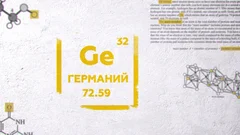
The periodic table contains 118 elements. For nearly all of them, we know who discovered them, where, and when. Only nine lack such data because they have been known as simple substances since prehistoric times. Three of these are in Group 14, which contains elements with some of the most unusual properties. This is explained by their position on the border between metals and nonmetals, allowing them to exhibit properties of both. Among these are carbon and silicon, which we discussed in previous episodes. This time, we focus on the germanium subgroup.
Titanium, Zirconium, Hafnium Dubbing on request Subtitles available (Russian)
Chemistry • 2023 • 25 minutes
The elements we discuss here today are metals. Under normal conditions, they are extremely inert, so their shine does not dull over the years. They also have very high melting points. Thanks to one of these metals, humanity crossed the sound barrier and conquered space. It is a key component of aviation alloys. The other two are important for nuclear energy. All three are in Group 4 of the periodic table, also known as the titanium subgroup. Today, we examine the properties of these elements.
Carbohydrates Dubbing on request Subtitles available (Russian)
Chemistry • 2023 • 25 minutes
The substances we discuss here are organic. They are essential components of the cells and tissues of all living things on Earth. Although these compounds belong to one class, their properties can vary greatly, enabling them to perform a wide range of functions. They can store energy, build the structural framework of organisms, and even encode hereditary information. The first known representatives of this class had the general formula Cₓ(H₂O)ᵧ — formally carbon and water compounds. Hence, their name: carbohydrates. In this episode, we examine their properties.

Corrosion of Metals Dubbing on request Subtitles available (Russian)
Chemistry • 2023 • 26 minutes
The sun, air, and water are mankind's best friends, and, at the same time, the worst enemies of what we create... They are the most frequent causes of the process that destroys 15 percent of the world's produced metals each year. Metal objects become unusable because of the phenomenon we call corrosion. Moreover, it can cause indirect losses. Just recall an oil spill from a tanker or a rusty pipe. In this episode, we get to the heart of the process... And learn how chemistry helps fight it.

Hydrogen Dubbing on request Subtitles available (Russian)
Chemistry • 2023 • 25 minutes
The element we discuss today is the most abundant in the universe. It accounts for almost 89 percent of all atoms. Much of the Sun and many other stars are made of it... And if you count its atoms in the Earth's crust, you'll find that only oxygen atoms outnumber it on the planet! The importance of these two elements is comparable. Unlike oxygen, which on Earth is commonly found as a simple substance, our subject almost always occurs in compounds. But in the rare cases when it exists by itself, it is also a gas — colourless, odourless, and tasteless... In this episode, we explore its chemical properties.