Man Changes the Earth Dubbing on request Subtitles available (Russian)
Tough Questions About Nature • 2021 • 26 minutes
<html>It would be interesting to see our capital during the time of boyar Kuchka! What stood where today’s residential neighborhoods are: forests, meadows, swamps? Geographers, botanists, and historians help us reconstruct this picture, which remains only as distant memories in toponyms: Bolotnaya Square or Third Roshchinsky Passage. The Earth is changing rapidly, and it’s not only nature and climate at fault but the anthropogenic process — human intervention. Is it true that the Sahara is a man-made desert, since on ancient maps, where today lie deserted sands, rivers flowed and bustling cities stood? Why is the Aral Sea drying up, and are we truly living in times of another global extinction? Experts of the programme <i>Grown-up Questions About Nature</i> answer these and other questions.</html>
Migrations and Animal Invasions Dubbing on request Subtitles available (Russian)
Tough Questions About Nature • 2022 • 26 minutes
Why does water in the Northern Hemisphere drain from a sink twisting counterclockwise, while in the Southern Hemisphere it twists clockwise? What does the “eye of the storm” look like, and what causes the strange Coriolis force? Top scientists from the country, including professors from various faculties of Moscow State University, answer these questions. Viewers will learn what science knows about the mysterious phenomenon of ball lightning, whether a single lightning strike could power an entire city, why there are so many similarities between different types of lightning and models of military rockets, and how trade winds differ from the typical winds that blow from the poles toward the equator.
Cyclones and Thunderstorms Dubbing on request Subtitles available (Russian)
Tough Questions About Nature • 2022 • 25 minutes
Why does water in the Northern Hemisphere drain from a sink twisting counterclockwise, while in the Southern Hemisphere it twists clockwise? What does the “eye of the storm” see, and what spins up the strange Coriolis force? Top scientists from the country, professors from various faculties of Moscow State University, answer these questions. Viewers will learn what science knows about the mysterious ball lightning, whether a single lightning strike could power a whole city, why there is so much in common between the types of lightning and models of military rockets, and how trade winds differ from ordinary winds that blow from the poles toward the equator.
Living Legends and Celebrities Dubbing on request Subtitles available (Russian)
Tough Questions About Nature • 2021 • 26 minutes
In historical times, there were animals so famous that their renown sometimes even surpassed that of people. It’s no wonder that an entire city was named after Alexander the Great’s favorite horse! Speaking of that super-stallion named Bucephalus, many legends circulated that he was much larger than other horses, that he had not one but two hearts, and that real toes sat above his hooves! What is true and what is fiction is revealed in the ninth film of our series. We tell about a special medal established for heroic animals, about famous dogs who have monuments erected to them, about trees so renowned they have their own names, and about why exactly six ravens have lived in the Tower of London for the fourth century now.
Living Fossils Dubbing on request Subtitles available (Russian)
Tough Questions About Nature • 2021 • 26 minutes
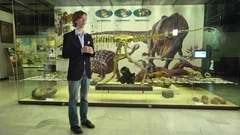
Which mammals might have lived alongside the dinosaurs that disappeared 60 million years ago? Is the giant fossil shark Megalodon, whose mouth could have fit five to six people, still alive? Do giant squids inhabit the ocean depths? After all, legends of kraken monsters exist, and sperm whales bear scars from enormous suckers. Zoologists, paleontologists, and paleobotanists will answer these and other questions. Viewers will learn which animals and plants are the oldest on Earth and which have changed little over the past half-billion years, and that the closest relatives of dinosaurs are not lizards and crocodiles, but birds. And, finally, the viewers will learn why some modern reptiles are also called “saur”.
Horns and Hooves Dubbing on request Subtitles available (Russian)
Tough Questions About Nature • 2021 • 26 minutes
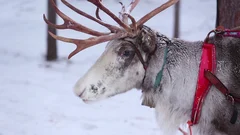
How do deer grow such enormous antlers in just one season, and why has this phenomenon attracted the interest of oncologists? How do wild reindeer differ from domesticated ones, and how do North American caribou differ from their “Old World” relatives living on the other side of the Bering Strait? Is it true that even cloven-hoofed animals can be predators, and why were they grouped with whales into one superorder with the surprising name “cetartiodactyls”? Experts of the series — biologists and paleontologists — discuss these topics and much more. Viewers will learn the real size of fossil megaceroses that had four-meter antlers, why the kabarga has canines akin to those of a sabre-toothed tiger, and why birds of the northern tundra must raise the alarm when they see an approaching herd of reindeer.
Truths and Tall Tales Dubbing on request Subtitles available (Russian)
Tough Questions About Nature • 2021 • 26 minutes
Animals and Sports Dubbing on request Subtitles available (Russian)
Tough Questions About Nature • 2021 • 26 minutes

The Strangest Plants Dubbing on request Subtitles available (Russian)
Tough Questions About Nature • 2021 • 26 minutes
Records of the Living Planet Dubbing on request Subtitles available (Russian)
Tough Questions About Nature • 2021 • 26 minutes
The Scariest and Most Dangerous Dubbing on request Subtitles available (Russian)
Tough Questions About Nature • 2021 • 26 minutes
Animal World Intellectuals Dubbing on request Subtitles available (Russian)
Tough Questions About Nature • 2021 • 26 minutes
Fires Dubbing on request Subtitles available (Russian)
Tough Questions About Nature • 2022 • 26 minutes
<html>The final film of the second season of <i>Grown-up Questions About Nature</i> tells about wildfires. They flared on the planet long before humansappeared with their matches and lighters. One cause is so-called “dry thunderstorm”, when clouds gather, lightning flashes, thunder rumbles, but... no rain falls. Not only forests burn in nature, but steppes, peatlands, and even stands of dry reed in lakes and rivers. The film features experienced firefighters and scientists — dendrologists — who tell viewers many interesting things and share useful information. For example: how to behave if you find yourself in a forest fire zone? Viewers will learn that nature itself has created surprising mechanisms to extinguish fire — pyrocumulonimbus clouds formed from evaporating moisture that pour rain onto raging flames; that fire can be fought... with other fire by setting counterfire lines; and that peatlands can indeed smolder for a year or two, but contrary to rumour, they do not burn for decades.</html>
Meteorites and Global Climate Change Dubbing on request Subtitles available (Russian)
Tough Questions About Nature • 2022 • 26 minutes
A renowned naturalist Alexander Khaburgaev answers the most common questions about wildlife. We have received these questions from viewers for years, and now it’s time to answer them! You will learn where the elephant’s trunk came from, how a cow chews, and who is the most dangerous in Africa.
Mudslides and Avalanches Dubbing on request Subtitles available (Russian)
Tough Questions About Nature • 2022 • 26 minutes
A renowned naturalist Alexander Khaburgaev answers the most common questions about wildlife. We have received these questions from viewers for years, and now it’s time to answer them! You will learn where the elephant’s trunk came from, how a cow chews, and who is the most dangerous in Africa.
Droughts and Sandstorms Dubbing on request Subtitles available (Russian)
Tough Questions About Nature • 2022 • 26 minutes
A renowned naturalist Alexander Khaburgaev answers the most common questions about wildlife. We have received these questions from viewers for years, and now it’s time to answer them! You will learn where the elephant’s trunk came from, how a cow chews, and who is the most dangerous in Africa.

Tsunamis and Floods Dubbing on request Subtitles available (Russian)
Tough Questions About Nature • 2022 • 26 minutes
A renowned naturalist Alexander Khaburgaev answers the most common questions about wildlife. We have received these questions from viewers for years, and now it’s time to answer them! You will learn where the elephant’s trunk came from, how a cow chews, and who is the most dangerous in Africa.
Volcanoes Dubbing on request Subtitles available (Russian)
Tough Questions About Nature • 2022 • 26 minutes
A renowned naturalist Alexander Khaburgaev answers the most common questions about wildlife. We have received these questions from viewers for years, and now it’s time to answer them! You will learn where the elephant’s trunk came from, how a cow chews, and who is the most dangerous in Africa.
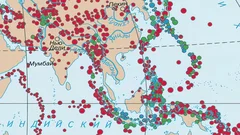
Earthquakes Dubbing on request Subtitles available (Russian)
Tough Questions About Nature • 2022 • 26 minutes
A renowned naturalist Alexander Khaburgaev answers the most common questions about wildlife. We have received these questions from viewers for years, and now it’s time to answer them! You will learn where the elephant’s trunk came from, how a cow chews, and who is the most dangerous in Africa.

Tornadoes and Hurricanes Dubbing on request Subtitles available (Russian)
Tough Questions About Nature • 2022 • 26 minutes
Famous naturalist Alexander Khaburgaev will answer the most common questions about wildlife. These questions we received from our viewers over several years, and now it’s time to answer them! You will learn where an elephant’s trunk came from, how a cow chews, and who is the most dangerous in Africa.