Principle of Movement
- Животные
- 10 episodes
- 2022
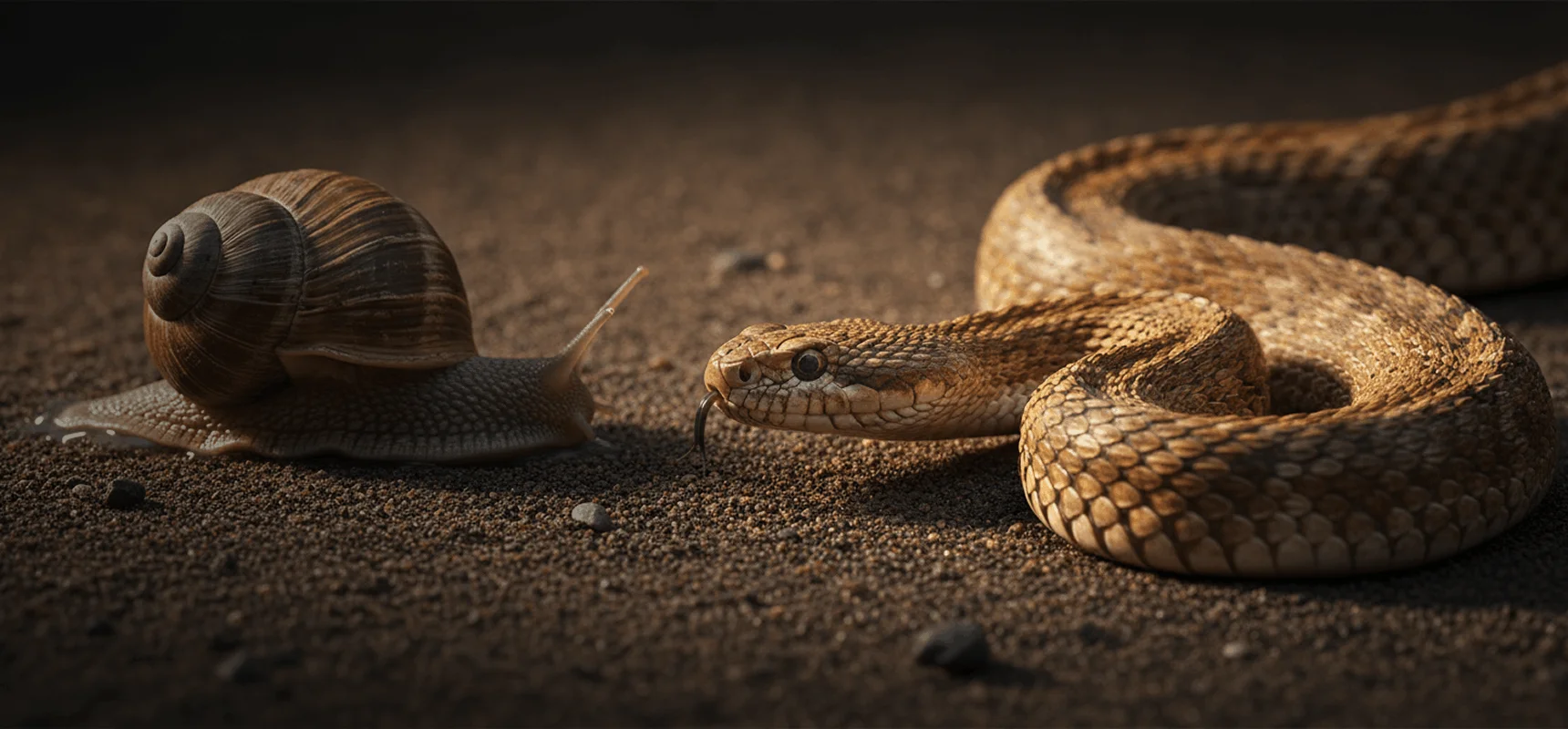
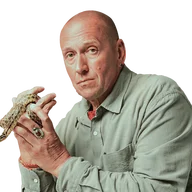
Host Oleg Shumakov will explain how living organisms move in nature. Viewers will learn what influences the choice of movement patterns, which are often quite unusual.
Hosts
Episodes

Step by Step Dubbing on request Subtitles available (Russian)
Principle of Movement • 2022 • 26 minutes
<html>In the next episode of the documentary series<i> The Principle of Movement,</i> we tell the story of animals that move by stepping. It may seem that such movement is the simplest form of locomotion, but that's not always the case. Those who walk on two legs must maintain their balance, while four-legged animals face even more challenges — how should they walk? Is it better to plant the entire foot on the ground or to march on tiptoe? How does deliberate stepping evolve into running? Can the same limb serve different purposes? Our viewers will learn how the cat, thanks to its ability to walk silently, became the planet’s most successful predator, and what allows a horse to reach the speed of seventy kilometers per hour. Our expert, Oleg Shumakov, is ready to embark on a journey during which he will meet the most whimsical and inventivefans of walking . To do this, he will go to deserts, mountains, and forests — and even set traps to catch an exceptionally cunning burrow-dweller.</html>
Faster Than the Wind Dubbing on request Subtitles available (Russian)
Principle of Movement • 2022 • 26 minutes
Imagine — nature forced you to live high up in the treetops or on cliffs, but didn’t give you wings. What would you do if you accidentally lost your balance and fell? Die? No! You would glide. However, the devices that make this clever trick possible are sometimes so bizarre that it’s not always easy to see how they work. We will introduce you to flying frogs, gliding snakes, and spiders that have learned to travel thousands of kilometers through the air. Our viewers will discover how these animals have adapted to rely on the air and why such a complex skill became necessary for them.
Like a Fish in Water Dubbing on request Subtitles available (Russian)
Principle of Movement • 2022 • 26 minutes
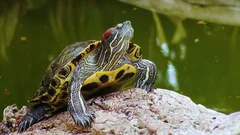
<html>How fast does a dolphin swim? Why does a sea turtle have no fingers? And how does a jellyfish, which has no muscles, manage to outrun ocean currents? In the episode <i>Like a Fish in Water</i>, we reveal these and many other secrets of underwater inhabitants.</html>
Cutting Through the Dunes Dubbing on request Subtitles available (Russian)
Principle of Movement • 2022 • 26 minutes
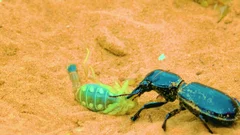
<html>How do animals move in challenging environments like loose substrate? Imagine an endless desert ahead, shifting sand underfoot, the scorching sun overhead, and a shortage of water. How do they survive? Many desert dwellers have made the right choice — they bury themselves in the sand! Some animals have gone even further, learning not only to burrow but to swim through it. To do this, they had to radically redesign their bodies. In the new episode of the documentary series <i>The Principle of Movement</i>, we tell the story of incredible creatures: underground snakes, frogs that migrated from swamps to deserts, lizards attempting to shed interfering legs, and many other animals that thrive by cutting through the dunes.</html>
On the Bottom Dubbing on request Subtitles available (Russian)
Principle of Movement • 2022 • 26 minutes
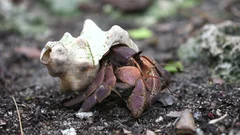
<html>Imagine having to survive under pressure far greater than the atmosphere we know. Around you — cold and dark, beneath your feet — uneven ground that is difficult to walk on or a thick layer of silt where your legs sink. Would you like that? Probably not. Yet some animals have not only survived in such inhospitable places but thrive there! In the latest episode of the documentary series<i> The Principle of Movement, </i>we introduce several unusual denizens of the seafloor. Where are a starfish’s eyes, and how does it use hydraulics to move its arms? Why do some fish come ashore while others stay underwater, and why do some crustaceans climb palms? Why don’t sturgeons and rays want to look at their food? Viewers will find answers to these and many other questions by watching the episode <i>On the Bottom</i> from <i>The Principle of Movement.</i></html>
Sustained Leap Dubbing on request Subtitles available (Russian)
Principle of Movement • 2022 • 26 minutes
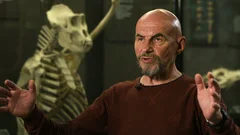
<html>Viewers will meet animals, some of which have never touched the ground. They live where we couldn’t even last a few hours—at dizzying heights in the treetops. We’ll discover how creatures, whose entire lives are one long leap, move! Among them are snakes, woolly gliders, sloths, insects, and even monkeys. How does the May beetle, which defies all aerodynamic rules, manage to take off from a perfectly smooth vertical surface? What helps the pygmy dormouse reach a tree hollow? And how can you tell a vine snake from the twig of the tree it sits on? Watch the new episode of <i>The Principle of Movement</i> on Living Planet!</html>

Underground Dubbing on request Subtitles available (Russian)
Principle of Movement • 2022 • 26 minutes
<html>In the new episode of <i>The Principle of Movement,</i> viewers will meet animals some of which have never seen sunlight. Life on the surface seems impossible for them. Yet, they can thrive where we couldn’t survive even for a few minutes — underground! How does the antlion hunt? What is a kivasak, and how many legs does it have? What features of a mole’s fur help it move underground at record speed? And how do spiny-tailed lizards manage to sink into the sand as if into water? Viewers will learn all this in the latest episode of <i>The Principle of Movement,</i> titled <i>Underground.</i></html>
Born to Crawl Dubbing on request Subtitles available (Russian)
Principle of Movement • 2022 • 26 minutes
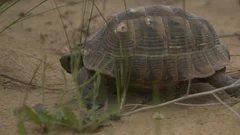
<html>To us, creatures used to moving on two limbs, crawling animals may seem somehow inferior. After all, they are slow, less maneuverable, and confined to one plane, unable to lift off the ground. But this is a misconception. Many crawling animals live far longer on Earth than we do, which suggests that their mode of movement has proven successful through evolution. Some of these creatures still puzzle zoologists and engineers. Why don’t the feet of sand lizards sink into the sand? How do millipedes manage their numerous legs? To uncover the secrets of crawling animals, we had to conduct a real investigation. In the new episode of the documentary series <i>The Principle of Movement</i>, we showcase five animals born to crawl exploring how they have outpaced many competitors in the evolutionary race.</html>
Masterful Flying Dubbing on request Subtitles available (Russian)
Principle of Movement • 2022 • 26 minutes
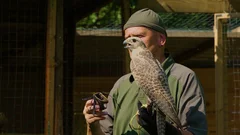
<html>We are creatures bound to the ground and can only reach the sky with flying machines. As a result, we always watch animals that have conquered the air with wonder and admiration. Many of us find it mysterious how some of our planet’s neighbours feel so confident in flight. Not just confident—many flying creatures set remarkable records in speed, maneuverability, or duration of flight. Yet, there is no magic in moving through the sky; there are natural laws that govern it, and we will explore them today. However, some animals continue to baffle zoologists and engineers. For example, how do insects fly? How much energy does a bat expend during flight? In the new episode of the documentary series <i>The Principle of Movement,</i> dedicated to flight, we analyze the movement principles of five animals that have mastered the sky to understand how they perfected the art of aerial acrobatics.</html>
Higher and Higher Dubbing on request Subtitles available (Russian)
Principle of Movement • 2022 • 26 minutes
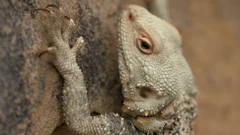
<html>Absolutely smooth vertical glass. Can you stay on it without falling? A tropical lizard — the gecko—moves on it as confidently as we stroll along a flat path in the park. The tree frog keeps up with the lizard; not only does it walk vertically, but it can also make dizzying leaps, pushing off surfaces that offer nothing to grip. Yet neither the frog nor the lizard has claws or suction cups to help them survive on a vertical surface. What is their secret? It turns out that, to survive in such challenging conditions, animals rely on chemistry and molecular physics. However, they are hardly studied at universities or have purposely designed devices for living at heights inaccessible to humans. Nature—a brilliant engineer and inventor—has done it for them. In the first episode of the documentary series<i> The Principle of Movement </i>on the Living Planet channel, we reveal how animals manage to exist at such heights.</html>