Secrets of the Living Planet
- Животные
- 31 episodes
- 2024-2026
Armed with the most modern equipment, scientists are only beginning to grasp many secrets of the universe. The series is devoted to questions modern science cannot yet answer. Various hypotheses have been proposed, which we will examine in detail, but each has its strengths and weaknesses.
Hosts

Episodes
Путешественники поневолеno EN translation Dubbing on request
Secrets of the Living Planet • 2026 •
Как получается, что в Москве появляются полярные совы и белые куропатки, под Тверью находят обессиленного грифа, а на Камчатку из Америки залетает крошечный колибри? В новой серии «Тайн живой планеты» мы проследуем по самым невероятным маршрутам животных. Увидим, как полярные крачки летают от Арктики до Антарктики, узнаем, зачем киты и акулы преодолевают тысячи морских миль, а ещё – с какой целью в дальние путешествия отправляются не только птицы, но и стрекозы, бабочки и даже мухи. Зачем они проходят такие расстояния, что же заставляет их снова и снова пускаться в путь?
Защищен - значит вооружен!no EN translation Dubbing on request
Secrets of the Living Planet • 2026 •
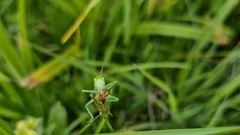
Что общего у ящерицы, которая отбрасывает хвост, со скунсом и электрическим угрём? Все они умеют защищаться – и порой настолько неожиданно, что человеку такое и не приснится. Маленькая соня способна буквально выскочить из собственной шкурки, морской слизень – расстаться с телом, а некоторые животные стреляют едким помётом, собственной кровью или используют настоящее химическое оружие. А есть и те, кто встречает врага мощным электрическим разрядом. В новой серии «Тайн живой планеты» выясним, на что способны животные, когда жизнь оказывается под угрозой.

Каннибализмno EN translation Dubbing on request
Secrets of the Living Planet • 2026 •
Каннибализм – одно из самых пугающих явлений в природе. Но всегда ли за ним стоит жестокость? Почему животные поедают собственных детёнышей, братьев, сестёр и партнёров? В каких случаях это становится стратегией выживания, а когда говорит о том, что в жизни вида что-то пошло не так? От пауков и крабов до акул, медведей и наших ближайших родственников – обезьян. Новая серия цикла «Тайны живой планеты» покажет, почему один из самых страшных законов природы неизбежен в мире животных.
Кто как естno EN translation Dubbing on request
Secrets of the Living Planet • 2026 • 26 minutes
Чтобы выжить, животные готовы к разным гастрономическим подвигам. Глотать добычу целиком. Переваривать пищу снаружи собственного тела. Охотиться на тех, кого остальные считают несъедобными. И даже, если верить популярной теории, есть нефть. Как травоядные становятся хищниками? Каким образом цапля, желая пообедать, справляется с кроликом, а кукушка – с ядовитыми мохнатыми гусеницами? Порой в мире жестокой конкуренции животным помогают уникальные пищевые стратегии. В этом путешествии мы постараемся раскрыть самые невероятные гастрономические секреты дикой природы!
The Sweet Life Dubbing on request
Secrets of the Living Planet • 2025 • 26 minutes
Sweetness is not just a taste — it’s a temptation that sometimes neither humans nor animals can resist. Butterflies, tiny hummingbirds, and colourful lorikeets seem to live for sweets. Even a mighty bear will endure bee stings to reach cherished honey. What is the magic of sugar? Why does it lure and captivate? There is more to it than calories and flavour. Sugar can do miracles: it can protect life from freezing by acting as a natural antifreeze. It provides strength when energy seems exhausted. Fast carbohydrates are a spark, a flash, an inner fire. What are sugars? What forms do they take in nature? And is life possible without them?
Family Nuances Dubbing on request Subtitles available (Russian)
Secrets of the Living Planet • 2025 • 26 minutes
Everyone knows that animals can be monogamous, where the parental pair remains stable, or polygamous — seeking new mates each season. However, these are not the only family systems in nature. For example, some species are true polygynists — males living with two or three families — while others mate exclusively outside their group. Which species exhibit which patterns? Why are there so many different schemes? And why can't all of Earth's inhabitants live by the same rules?
Wonders of Camouflage Dubbing on request Subtitles available (Russian)
Secrets of the Living Planet • 2025 • 26 minutes
<html>Who doesn’t know the flounder — the fish that masterfully disguises itself on the sea floor? Many have heard of the stick insect, which is indistinguishable from a dry twig. But there are even more fascinating cases — for example, in Latin America, a butterfly that remarkably resembles a spider. Such clever mimicry can be truly astonishing. Imitation can involve not only appearance but also sound and smell. How and why does this happen? Why would nature be inconceivable without these extraordinary disguises? Don’t miss the new episode of <i>Mysteries of the Living Planet</i> — amazing discoveries await!</html>
There’s No Accounting for Taste Dubbing on request Subtitles available (Russian)
Secrets of the Living Planet • 2025 • 26 minutes
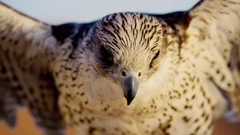
Can one eat what seems inedible? For example, oil… It turns out some insects dare to do so. Why? Nature has endowed its inhabitants with incredible and sometimes shocking tastes. Vultures that shun carrion. Bearded vultures that swallow bones whole. Even tits that will snack on other small birds. In the wild, tastes are not debated — only marveled at. Come discover surprising facts about animals’ dietary oddities!
Wild Hunt Dubbing on request Subtitles available (Russian)
Secrets of the Living Planet • 2025 • 26 minutes
Is it true that predators are generally smarter than their prey? If so, why haven’t they eaten all the herbivores? Each has its secrets. So, which group has more developed “intelligence”? Are there hunting techniques that hunters intentionally hide to gain advantage? Do snakes really hypnotize their prey? Do stoats dazzle rabbits with dizzying leaps? And how does resembling a huge whale help swifts hunt? Today’s guests include animals ranging from a tiny spider that has learned to handle larger, more dangerous relatives, to prides of powerful lionesses demonstrating remarkable coordination.
At High Speeds Dubbing on request
Secrets of the Living Planet • 2025 • 26 minutes
Любой школьник знает: среди птиц нет никого быстрее сокола-сапсана, самый прыткий зверь – гепард, а среди рыб чемпионы – марлин и парусник. Однако эти факты не учитывают скорость относительную. Мы подготовили ряд головоломок, которые вас точно удивят или даже шокируют. Загадка №1: если бы человек переставлял ноги так же быстро, как это животное, то бежал бы со скоростью 500 км/час – о ком идёт речь? Загадка №2: какое насекомое пробегает сотни величин своего роста всего за минуту? Также в новой серии программы «Тайны живой планеты» вас ждут загадки №3, 4, 5, 6… И главное – потрясающие разгадки!
Sleep or Not to Sleep? Dubbing on request Subtitles available (Russian)
Secrets of the Living Planet • 2025 • 26 minutes
Птицы-веретенники могут совершать месячный беспосадочный полёт над океаном, а киты и вовсе не останавливаются всю жизнь. Неужели они совсем не спят? Или такой отдых нужен каждому организму? Ответы на эти вопросы – в новой серии программы «Тайны живой планеты». И это ещё не всё! Как думаете, способны ли животные видеть сны? Чем сон отличается от спячки? Как может муравей выспаться буквально за одну минуту, а хомячок впадать в спячку до 20 раз за одну зиму? Теперь это не будет для вас секретом!
Males, Please Do Not Disturb Dubbing on request Subtitles available (Russian)
Secrets of the Living Planet • 2024 • 26 minutes
Nature exhibits an astonishing phenomenon where females can reproduce without mating with males, a process called parthenogenesis. The scenarios are truly remarkable. For example, aphids can reproduce parthenogenetically at incredible rates: each newborn aphid is already pregnant at birth — so the mother gives birth to daughters and granddaughters simultaneously. Over a single season, she can produce hundreds of thousands of her own copies. There are species — such as some butterflies, crustaceans, and even lizards — in which males are entirely absent; they do not appear because they are unnecessary. There are more incredible parthenogenetic reproductive scenarios which are covered in this film.
Nature’s Tricks Dubbing on request Subtitles available (Russian)
Secrets of the Living Planet • 2024 • 26 minutes
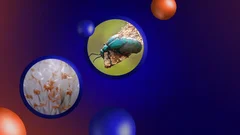
For some reason, we are not amazed when a nasty caterpillar transforms into a beautiful butterfly, despite it being a true wonder. Even more astonishing metamorphoses occur in nature. For example, the beetle Myrmecia produces larvae that don’t even feed, because their task is to reach a place with abundant food. These tiny worms form a flower-like cluster and patiently wait for a bee. Clinging to it, they enter the hive, get into the comb cells, kill the future bee, and... after changing form, feed on the honey meant for it. Some parasites change their appearance two, three, four, or even five times. Some live in different environments: initially inside a host, they eventually drive it to thirst, prompting it to seek water. They then move into the water, where they find an aquatic larva, patiently wait for it to pupate into a beetle or dragonfly, and then fly away on that insect. One miraculous transformation follows another, like in a fairy tale. The film showcases nature’s tricks related to a phenomenon scientifically called “complex life cycles”.
Frozen Dubbing on request Subtitles available (Russian)
Secrets of the Living Planet • 2024 • 26 minutes
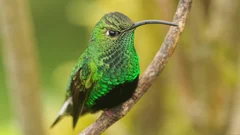
One favorite sci-fi trope is a frozen human or prehistoric monster thawing out after centuries or even millennia. Is this possible in theory? After all, a frozen in ice crucian carp can revive, and the Siberian salamander (a small newt) can survive in permafrost for hundreds of years, then come back to life and escape from a lab. The film explores how cold affects the organisms of various animals and whether, in the future, astronauts could be placed in cryobiosis — since journeys to distant worlds might take centuries.
Brave and cowardly Dubbing on request Subtitles available (Russian)
Secrets of the Living Planet • 2024 • 26 minutes
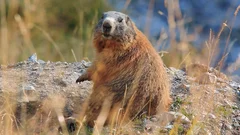
Name the bravest animals. These would surely be lions, tigers, or buffaloes. Some will recall the honey badger as the bravest in the record books. And what about the cowardly ones? Rabbits, mice, timid deer… In reality, the situation is much more complicated and fascinating. Experts — well-known zoologists, ethologists, and zoo psychologists — explain that it’s not that the hare is inherently cowardly and unable to defend itself, or that a lion cannot sometimes be cowardly. By the film’s end, the viewer will begin to understand that human concepts — bravery, nobility, cowardice, or faint-heartedness — simply do not apply to other members of the animal kingdom.
Dinosaurs Named Birds Dubbing on request Subtitles available (Russian)
Secrets of the Living Planet • 2024 • 26 minutes
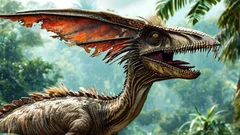
Where did birds come from? You might think that's an odd question. Yes, we do recall the picture of Archaeopteryx, the ancestor of modern birds, from the school textbook. But what did Archaeopteryx itself descend from? Surely from flying dinosaurs? It’s much more interesting: birds are dinosaurs. After long debates, scientists reached this conclusion: the clade Archosauria now unites dinosaurs, including birds — yes, modern birds. The film explains why other dinosaurs went extinct and how birds evolved from bipedal theropods to conquer all three realms: land, water, and air.
Great Extinctions Dubbing on request Subtitles available (Russian)
Secrets of the Living Planet • 2024 • 26 minutes
<html>The Great Flood appears in all ancient human traditions. However, besides the transgression of the world ocean (the scientific term for the Great Flood), other cataclysms occurred, leading to changes in climate and the composition of life — both flora and fauna. When did humanity realize that "pre-flood" creatures once inhabited Earth? And how many major extinctions have occurred throughout Earth's history? This episode of the series <i>Mysteries of the Living Planet</i> answers these questions. Viewers will learn whether dinosaurs truly went extinct because a massive planet-impacting object struck Earth and why some of them survived alongside small mammals that eventually became our ancestors.</html>
Do animals have self-awareness? Dubbing on request Subtitles available (Russian)
Secrets of the Living Planet • 2024 • 26 minutes
The presence of self-awareness in animals remains a hotly debated topic among biologists, psychologists, philosophers, and other scientists. It once seemed that the mirror test settled the issue: a mark is placed on an animal’s head, and if it attempts to remove it while looking in a mirror, it indicates an understanding of the reflection. However, unexpectedly, bees, ants, and some fish pass the mirror test, while seemingly smarter animals like dogs and cats fail spectacularly. The film helps to untangle these complex and important questions: do various animals recognize themselves as individuals? Do they understand death? And do they retain familial feelings?
The magic of living sound Dubbing on request Subtitles available (Russian)
Secrets of the Living Planet • 2024 • 26 minutes
For years, scientists have pursued the elusive 52-hertz whale — a mysterious creature that emits calls at 52 Hz, a pitch not known in any other whale species. What is it? An undiscovered pinniped species? A lonely whale whose peers cannot hear its calls? Nature holds many secrets about living sounds. Some have been revealed: we know how certain crustaceans use powerful sound waves to break mollusk shells, and with specialized instruments, we can hear what chatty fish are saying to each other. In this film, scientists explore the most astonishing stories of animal sound communication.
Islands of Lilliputians and Giants Dubbing on request Subtitles available (Russian)
Secrets of the Living Planet • 2024 • 26 minutes
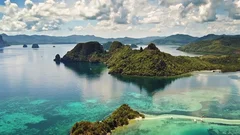
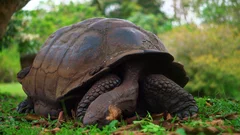
According to ancient legends and traditions, where did giants, dwarfs, and various monsters live? Of course, at the edge of the world, on distant islands. In fact, there’s no smoke without fire, and Jonathan Swift was partly right when he populated one island with giants and another with Lilliputians. British scientist Foster formulated a rule stating that in isolated island populations, both gigantism (an increase in animal size) and dwarfism occur. For example, dwarf mammoths lived on Wrangel Island, dwarf elephants in Sicily and Sardinia, and dwarf hippos in Madagascar. In Australia, which can also be considered an island, giant kangaroos roamed. The scientists featured in the film reveal nature’s secret: why some species grow larger while others shrink, sometimes even on the same island. They demonstrate that Foster’s rule held true even in prehistoric times, when dwarf dinosaurs roamed across islands and later, giant fossil hedgehogs scurried about.