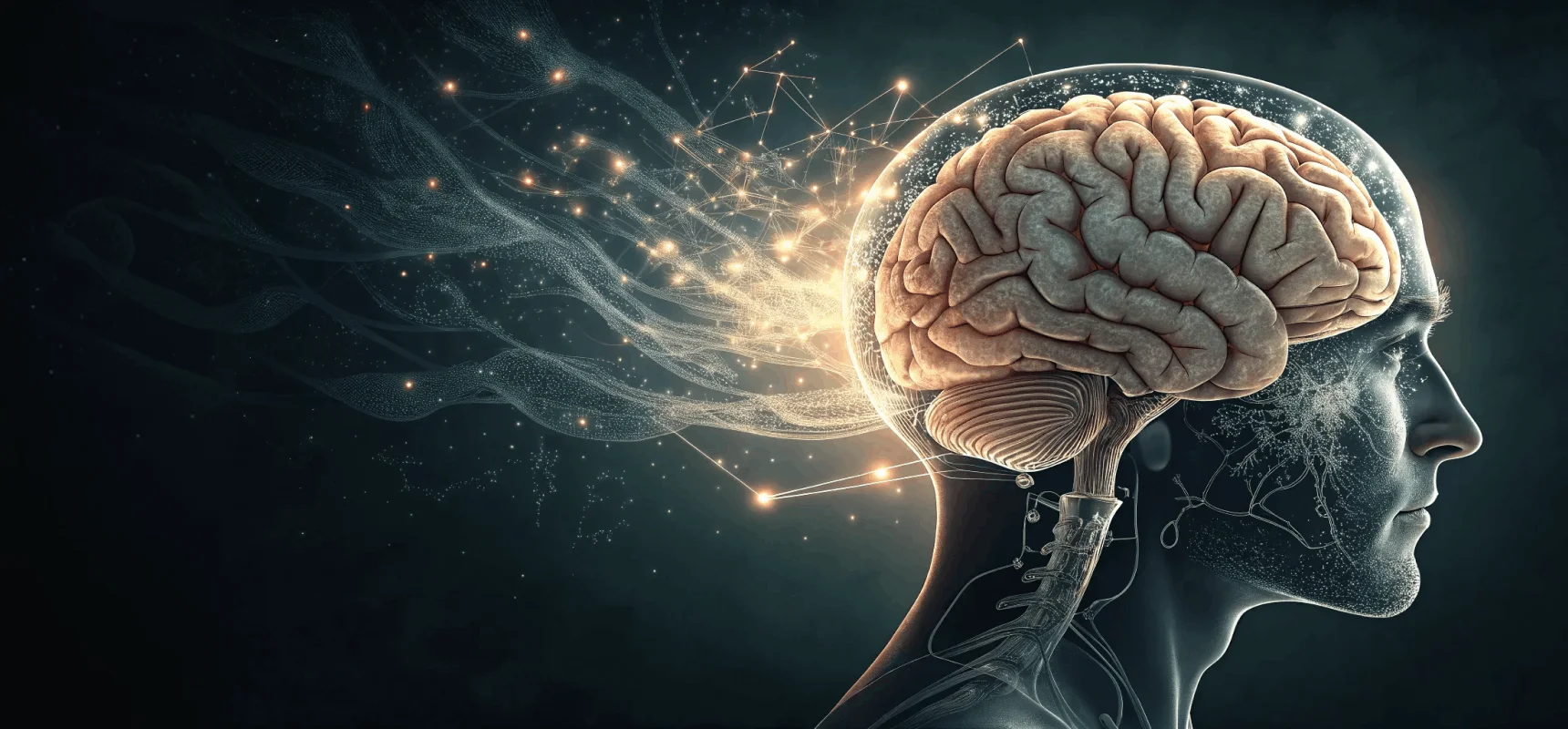
Mysteries of the Brain
- Медицина, Наука
- 5 episodes
- 2014-2015
Why do humans have such a complex brain, and how did we get it? Do people really use only 10% of their brains? How does a male brain differ from a female one? Scientist and host Alexander Kaplan will answer the most popular questions on how the brain works.
Hosts

Episodes

Film Five. Another Brain Dubbing on request
Mysteries of the Brain • 2015 • 43 minutes
We sometimes don’t even realize that we are capable of performing the most incredible and seemingly inexplicable feats — all thanks to our brain. Extraordinary abilities have always sparked interest, envy, or fear within human society. Those who possess such abilities are, to put it mildly, different from everyone else. But what is considered normal, and what is not? Who sets these rules and norms? Why are we still unable to look beyond the known, to understand and explain what is this other brain like, how does it work and what hidden possibilities may it hold?
Film Four Dubbing on request
Mysteries of the Brain • 2015 • 43 minutes
Who on Earth is the smartest: humans or their creations? Is a "machine uprising" a real threat? Can we build an artificial brain, and does artificial intelligence already exist today? Intelligence is seemingly what sets humans apart from other living beings — but how smart are our lesser counterparts? What is intelligence really? How do we measure it, and where does it originate? What are the different types of intelligence and ways of thinking? Physicists and poets, men and women — who is smarter? This is the eternal debate of opposites; should it be settled? And where is the course of civilization leading us — toward progress or regression of the human brain? Are we becoming more intellectual, or, on the contrary, losing our mental abilities?

Film Three Dubbing on request
Mysteries of the Brain • 2015 • 44 minutes
Dozens or even hundreds of fleeting thoughts flash through a person’s mind in a minute. And that’s only the ones we are aware of. Far more exists in our heads that is unformulated, passing as images or sensations or entirely unnoticed by us. The show’s host will attempt to reveal the mysteries of our brain’s workings and answer questions: What is a thought? Can we view the world inside us with modern technology? Do we truly make our own decisions, or does it only seem that way? What factors influence our decision-making? Why do we make certain mistakes, and why does our brain keep memories of them? What is the most frightening thing for a person?
Film Two Dubbing on request
Mysteries of the Brain • 2014 • 44 minutes
Memory, attention, thinking, imagination, decision-making ability (briefly, at the very end, to create a “bridge” to the third episode), as well as feelings and emotions (love, hatred, fear — where they originate, what specifically happens in the brain when we experience different feelings, and whether this can be “read” with technical means). How our brain affects cognitive abilities, individual differences. The link between brain and mind, and between language/speech and consciousness. Mowgli — so-called Mowglis — do not think in the way we usually understand the term because thinking requires language. You need words, images, and thought: without speech there is no thought. Do we think in words and/or images? How does it happen?
Film One Dubbing on request
Mysteries of the Brain • 2014 • 43 minutes
The evolutionary path our brain has taken — from ancient, ape-like humans to Homo sapiens. What triggered these changes, what we ultimately gained, and what we had to sacrifice. The roles of the limbic system and the neocortex. Brain physiology: neurons, glial cells, and synapses and their principles of work. The energy demands of the brain. The relationship between the number of synapses and an individual's abilities. The limits of the brain’s potential.