History of Little Russia from A to Z
- История
- 18 episodes
- 2023
The video lecture series History of Little Russia from A to Z is dedicated to key issues in the history of the Lesser Russian lands from ancient times to the present day. The lecturer — Candidate of Historical Sciences and senior researcher at the Institute of Russian History of the Russian Academy of Sciences, Andrey Marchukov — discusses how the people of Lesser Russia formed, how their historical fate developed, and why, in the Soviet era, this originally Russian territory was singled out as a separate republic — Ukraine.
Hosts
Episodes
Episode 17. Ukraine after the USSR Dubbing on request
History of Little Russia from A to Z • 2023 • 13 minutes
At the time of the USSR’s collapse in 1991, Ukraine was one of the leading Soviet republics: it had quality education, a network of scientific and industrial enterprises, developed agriculture, and a powerful military-industrial complex producing rockets, transport aircraft, and tanks. Contemporary Ukrainian history is often divided into before and after the 2014 Maidan. The victory of the "Euromaidan" brought to power people who dismantled the old state without building a new one. In Ukraine, they chose not state-building but the realization of the old Ukrainian national project, along with its associated ideas and ideology. Only by pursuing nationalist, anti-Russian aspirations could they justify severing ties with Russia and integrating into the EU and NATO. Ukraine was undermined by its own leadership — the Ukrainian ruling class, political-economic elite, and humanitarian intelligentsia. They are responsible for civil war and fratricide, as well as the degradation of the economy and social sphere. They sacrificed the Ukrainian people to their ideas and visions. This is the state Ukraine has arrived at since 1991.
Episode 16. Soviet Ukraine Dubbing on request
History of Little Russia from A to Z • 2023 • 13 minutes
Ukraine’s development and Ukrainian society during this period experienced two divergent processes. On one hand, there was a process of internationalization — a rapprochement among the peoples living in the USSR. This policy was already present under Khrushchev and truly flourished under Brezhnev. Economically and socioeconomically, Ukraine, from the early 1930s and into the postwar period, began to develop into a highly advanced economy with modern industries: metallurgy, machine building, chemical industry, and aircraft construction. The space industry developed actively, while electronics and electrical engineering also grew. Moreover, the Soviet state invested colossal sums in the development of Western Ukraine.
Episode 18. The Psychology of Ukrainianness Dubbing on request
History of Little Russia from A to Z • 2023 • 13 minutes
The prominent publicist V. V. Shulgin, who observed the first emergence of Ukrainianness on the historical stage in the early 20th century, in his article “Ukrainizing Ones and Us” (1938), provided the following classification of the then-bearers of “Ukrainian” consciousness: “As with other sectarians, the ukrainizers can be divided into three categories: 1) Honest but ignorant — those who are deceived; 2) Knowledgeable but dishonorable — those whose calling is to deceive the "younger brother"; 3) Knowledgeable and honest. These are maniacs of schism; they deceive themselves”. A key to understanding Ukrainianness as a psychological phenomenon is the aphorism already in use: “An ideological Ukrainian is not one who loves Ukraine but one who hates Russia”. This adage accurately reflects reality. Ideological Ukrainianness is an ideology of hatred — an irrational hatred. Russophobia is always masked by various false ideologies. The ideology of Ukrainian nationalism is characterized by a number of psychological stereotypes that can be seen as a form of deviation, a disturbance of the psychological wholeness of the individual. Overcoming Ukrainianness is largely a task of psychological rehabilitation of both the individual and society as a whole.
Episode 13. Lenin — the Creator of Ukraine Dubbing on request
History of Little Russia from A to Z • 2023 • 13 minutes
Lenin was an extremely energetic, ambitious, and charismatic man. By nature, he was an extremist. It was his energy and efforts that created the Bolshevik Party and later the Soviet state. His views on many issues — particularly on the national question and the so-called Ukrainian question — later formed the foundation of the policies of both the Soviet state and the Communist Party.
Episode 12. The Tragedy of Galician Rus' Dubbing on request
History of Little Russia from A to Z • 2023 • 13 minutes
In Ukraine, Galicia is portrayed as the model of the Ukrainian nation, the territory around which Ukraine was formed and which allegedly served as its spiritual guide. Galicia is a land with a glorious history but a tragic fate. The Ukrainian nationalist character largely developed because, over more than half a century, this territory experienced two genocides and two mass exterminations. While the mass killings during World War II are well known — carried out by the Organization of Ukrainian Nationalists serving the German Nazis for their own ends — much less is known about the second genocide: the mass extermination of Galicia’s population during World War I.
Episode 15. Ukrainian Nationalists Dubbing on request
History of Little Russia from A to Z • 2023 • 13 minutes
When speaking of Ukrainian nationalism during World War II, people usually mean Western Ukraine — Galicia, Volhynia — and the actions of the Organization of Ukrainian Nationalists and the Ukrainian Insurgent Army in that region. Indeed, the main activity of the nationalists fell on those lands. However, they also operated across the entire occupied territory of the Ukrainian SSR. The national question in Nazi policy toward the occupied territories was central. Everything was viewed through the prism of racial theory. Peoples were ranked by their degree of completeness and capacity for independent life and development. The main instruments were anti-Semitism and Russophobia. Alfred Rosenberg, minister for the occupied eastern territories, and his aides believed Russia should be destroyed because it was Russia and that it would be easier to do so by dividing it and creating German-friendly states around it, with Ukraine being the chief link.
Episode 14. Ukrainization Dubbing on request
History of Little Russia from A to Z • 2023 • 13 minutes
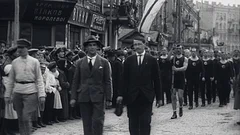
Ukrainization is one of the central issues in the history of Ukraine, Little Russia, and Russian history as a whole. In the 1920s–30s, as a result of deliberate state policies, Ukraine was created not just as a territorial unit but as a national republic. A Ukrainian nation, Ukrainian identity, and the Ukrainian language were formed and spread among millions. Ukrainization was largely coercive. While in some cases it was voluntary, in the overwhelming majority it involved violence against people. The process was carried out by the party itself. However, there were not enough bearers of Ukrainian identity and language, so former Petliurists, Hetmanite supporters, and Central Rada adherents were widely recruited. Ukrainian nationalists, who years earlier had suffered total defeat because their ideas were not embraced by the people, later became in demand. Initially met with distrust, they eventually entered Soviet organs of power — particularly in education, literacy campaigns, and culture—with a mix of suspicion and, later, joy. This marked the beginning of derussification in all areas.
Episode 10. Nikolai Gogol Dubbing on request
History of Little Russia from A to Z • 2023 • 13 minutes
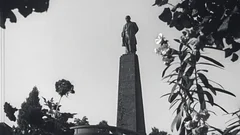
Nikolai Vasilievich Gogol was a great writer who influenced world literature. Today, in Ukraine, attitudes toward Gogol are ambivalent. On the one hand, some attempt to claim him as a Ukrainian nationalist and patriot; on the other, his work is taught as part of world literature alongside other Russian writers. He is often called a two-faced person — someone who wrote his most brilliant, bright, and sunny works about Ukraine, while, despite his efforts, could not come to love Russia in the same way. Long before other figures of the common Russian idea, Gogol advanced the notion that Great Russians and Little Russians should form a single Russian nation. He stated that Little Russians and Great Russians are two Russian peoples, two tribes with different historical paths and distinct spiritual and character traits. He believed that Great Russians and Little Russians should merge, as fate itself had predestined it.
Episode 9. The Little Russia Collegium Dubbing on request
History of Little Russia from A to Z • 2023 • 13 minutes
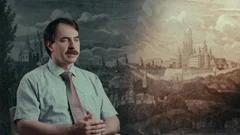
Mazepa’s rebellion permanently changed the Russian authorities’ relations with hetman autonomy. Until then, Mazepa enjoyed Peter I’s boundless trust. For half a century, Russian authorities did not hinder the Cossack elite from growing wealthy and becoming landowners: rather, they nurtured it. An important innovation of Peter’s was the establishment of the office of the royal resident with the hetman. The resident’s powers included the military field — he was to prevent possible mutinies and betrayals. But primarily, residents were to control hetmans and the Cossack elite, reporting everything — the moods and events — to Petersburg. Corruption and oppression flourished. After the Great Northern War, Peter decided not to appoint a new hetman. On May 16, 1722, the Little Russian Collegium was formed, which from then on was responsible for administering the region. The functions of the Little Russian Collegium included oversight of administrative and judicial affairs in the Hetmanate, as well as primary control over finances. The Collegium consisted of six representatives of the Little Russian elite and six representatives from the Great Russian side.
Episode 11. The Valuev Circular Dubbing on request
History of Little Russia from A to Z • 2023 • 13 minutes
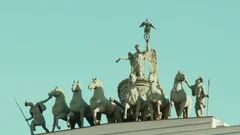
The language of the educated elite in Little Russia was Russian. It primarily traced its roots to Old Russian and partly to Church Slavonic. As a result, Russian became the all-Russian language. Polish Ukrainophiles emerged who sought to revive a Poland that included Little Russian lands. At first, they attempted to directly influence the people, but nothing significant came of it. Thus, the phenomenon of Polish Ukrainophilism arose. These individuals loved Ukraine, praised it, and understood Ukraine as a cultural part of the Polish rather than the Russian world. Such people even appeared among the educated Little Russians. Creating artificial languages for Austria-Hungary was an instrument of Austrian national policy toward its diverse population. After 1848, when it became necessary to distinguish Russians in Austria-Hungary from Russians in the Russian Empire, the Austrian government made efforts to invent the “Ukrainian language”. This was the basis for the so-called Valuev Circular. In fact, both the Valuev Circular and the Ems Ukaz did not restrict the Little Russian speech or its most widespread Poltava dialect. Rather, they targeted the invented variant of the “Ukrainian mova” that Austro-Hungarian activists attempted to export into the Russian Empire to undermine imperial unity.
Episode 8. Ivan Mazepa Dubbing on request
History of Little Russia from A to Z • 2023 • 13 minutes
Who was Mazepa really? A national hero? A traitor? His entire life was governed by one well-known phrase: “To betray at the right time is not betrayal but foresight”. He came from the Orthodox Little Russian nobility but was raised and educated abroad. He served under Jan Kazimierz, then under the pro-Polish Hetman Pavlo Teteria, and later, in a turn of events, Mazepa aligned himself with Petro Doroshenko. Mazepa was well-educated, very smart, crafty, and a courtier skilled at gaining trust. He enjoyed the boundless confidence of his numerous patrons and became Peter I’s adviser on Polish affairs. A close personal friendship developed between them. Mazepa became the sovereign’s supporter, even in military matters. But had it not been for the Great Northern War and its setbacks for Russia, Ivan Stepanovych Mazepa might have been remembered as Peter the Great’s faithful ally — his right hand in Little Russia, a glorious hetman. Yet, changing his political stance once more, he entered into secret agreements with the Poles. Moreover, Mazepa began secret negotiations with the Swedes. Trying to turn to everyone and no one, he shocked even his close circle with his betrayal. Peter I pardoned all of Mazepa’s followers, stating that the Cossacks were not guilty of the hetman’s treason, thereby effectively suppressing the uprising. Mazepa always sought to side with the stronger, with those who had more power and more luck at a given moment.
Episode 6. The Pereyaslav Rada Dubbing on request
History of Little Russia from A to Z • 2023 • 13 minutes
Negative attitudes toward the Pereyaslav Rada actually originate from the ideology of the Ukrainian movement, which has become the state ideology in today’s Ukraine. The Pereyaslav Rada is either avoided or described as a treaty of equals, a military alliance, a protectorate, or something insignificant. At that time, Russia was at peace with Poland but watched events across Eastern Europe with great caution. The Zaporozhian Host persistently and insistently bombarded Moscow with appeals. Moscow had long been restrained but understood that its policy would need to change. The decision was made to accept the Zaporozhian Host under the sovereign’s protection. Khmelnytsky gave a speech in which he stated that there are four sovereigns, which again emphasizes that he had no intention of creating an independent state. There is the Polish king, who imposed Catholicism, the Tatar and Turkish rulers. But how does the Orthodox people live under Muslim rule? And there is the Orthodox eastern sovereign of the Greek faith. The Hetman offered a choice, compelling no one. As Russian and foreign witnesses attest, a nationwide expression of will occurred — the General Rada.
Episode 7. Little Russia in the Russian Empire Dubbing on request
History of Little Russia from A to Z • 2023 • 13 minutes
In modern Ukraine, the period of Little Russia — when Ukraine was part of the Russian state and later the Russian Empire — is portrayed as a time of national, economic, and social oppression of Ukrainians. Moreover, it is often said that Ukrainians had no homeland, that Russia was an occupying country for them, and that the homeland belonged only to a narrow circle of Ukrainophiles. But was this really the case? Did the Little Russians feel that way during those many decades and centuries within the Russian state? The reunification with Russia after the Pereyaslav Rada was a long, hard-won decision by the Little Russian people of all estates. It was indeed a reunification of two parts of Rus’, achieved through a nationwide expression of will. For the overwhelming majority, this was their homeland — their country where they could fully realize themselves in any sphere. Exceptions were those who did not want to consider Russia their homeland. For the rest, it was their homeland, their country, where they found their identity and opportunity.
Episode 5. The Union of Brest Dubbing on request
History of Little Russia from A to Z • 2023 • 13 minutes
The Union of Brest was concluded at the very end of the 16th century. It would seem that, at that time, there was no thought that a state called Ukraine would arise. Nevertheless, despite this, the events connected with the adoption of the union had a colossal impact on the entire history of Eastern Europe and the Commonwealth, greatly contributing to the sharpening and deepening of the internal crisis within that state.
Episode 4. Little Russia under Polish Rule Dubbing on request
History of Little Russia from A to Z • 2023 • 13 minutes
The Polish–Lithuanian Commonwealth was a monarchy, but the kings’ power was limited and gradually became more restricted. In fact, the magnates were the true lords of the land and its masters. Their power was extensive; beyond social privileges, the magnates also held significant political rights. They occupied administrative positions within the Polish apparatus, and through these organs of power, they governed the state. Moreover, their political rights were so broad that they included the ability to form organizations to defend their rights and the right to lawful rebellion against the kings if those monarchs violated liberties and freedoms. Thus, the magnate nobility possessed the broadest power, supplemented by economic strength. For the common people — the peasantry, Cossacks, townspeople, Orthodox clergy, and the Orthodox Church — life within the Commonwealth increasingly became a period of severe social, economic, and later national-religious oppression. It is no coincidence that these circumstances ultimately led to a deep, protracted crisis of the state and to the social and national-religious upheaval known as the national liberation war led by Bohdan Khmelnytsky.
Episode 2. Little-Russians and Ukrainians Dubbing on request
History of Little Russia from A to Z • 2023 • 13 minutes
Little Russian and Ukrainian. In popular speech, the word "Ukrainian" was not used; it originally referred only to an inhabitant of the region. Although these terms are different — one arising earlier, the other later — today they are self-designations, names of a particular people. They carry the weight of political history and politicization, but again, due to the historical tradition formed in the twentieth century under the Soviet state, even those who call themselves Ukrainians do not necessarily consider themselves people of non-Russian roots or of non-Russian origin. Thus, the words "Little-Russian" and "Little Russ" automatically emphasize a person’s Russianness, the Russianness of that people. Even if today we call them, or they call themselves, "Ukrainians", that does not mean these people renounce Russianness or deny their historical past. Therefore, both terms have a right to exist at present.
Episode 1. Little Russia and Ukraine Dubbing on request
History of Little Russia from A to Z • 2023 • 13 minutes
The names “Little Russia — Ukraine” embody two completely opposite national-cultural and political choices. "Little Russia" refers to the concept of all-Russian unity, as part of the Russian world. "Ukraine", on the other hand, is, in a sense, a negation of that unity — something entirely separate and independent. How did the politicization of this term and the alternative term — “Ukraine” — occur? Where did it originate? Historically, both terms — “Little Russia” and “Ukraine” — have been used to refer to this land. Someone who calls this land “Little Russia” is specifically referring to all-Russian unity. However, even a person who, by established tradition, calls this territory “Ukraine” does not necessarily understand it as “Anti-Russia”.
Episode 3. Kievan Rus' Dubbing on request
History of Little Russia from A to Z • 2023 • 13 minutes
In the current ideology of the Ukrainian state, the Ukrainian concept of history asserts as a principal point that the Ukrainian people have existed for centuries since ancient times. Kievan Rus' is regarded as their national state and is considered uniquely theirs, while modern Russians are seen as having formed much later, with any connection to the ancient Rus' heritage regarded as extremely indirect. But is this really the case? Who actually lived in ancient Rus'?