European Fascism. Before the Court of History
- История
- 26 episodes
- 2023
The documentary project is a series of original video lectures by a well-known historian, author of numerous books and encyclopedias, and specialist in the history of Nazi Germany, Konstantin Alexandrovich Zalesky.
Hosts
Episodes
Issue 25. The 'Ost' Plan Dubbing on request
European Fascism. Before the Court of History • 2023 • 13 minutes
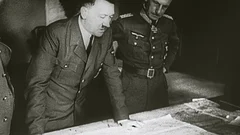
Because the main direction of German expansion was to the East, Hitler’s principal conquest plans targeted the territory of the Soviet Union. Operation Barbarossa fit logically within National Socialist ideology — the idea of acquiring Lebensraum. This racial approach envisioned a certain arrangement of future German rule in the East, on conquered eastern territories. It was assumed that after the war — after the complete defeat of the Soviet Union and the destruction of the Soviet state — a series of measures would be taken to turn the territory into a reservoir of raw materials and food. Initially only the main goals were announced, stated clearly and definitively. The Generalplan Ost was not adopted during the war, nor was it expected to be; it was discussed during the war and Adolf Hitler was to approve it after victory over Russia. What did Generalplan Ost imply? It consisted of a large number of disparate documents discussing what would be done in Russian territory. There was no final version, but we can note that during the war professors, political figures and high-level experts — agricultural and demographic specialists, not merely Nazi ideologues but the scientific community — debated reducing the population of the Eastern territories to make occupation economically efficient.
Issue 26. The People's Court Dubbing on request
European Fascism. Before the Court of History • 2023 • 13 minutes
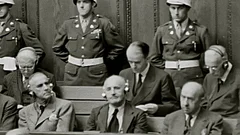
A truly outstanding event in world history was that World War II effectively concluded with the Nuremberg Trials — the International Military Tribunal against the principal war criminals. Today the Nuremberg Trials are often called the "people’s court", and in essence they were a people’s court. Legally, however, it was a tribunal involving four victorious countries that tried the principal war criminals, not the Nazi regime per se. An Extraordinary Commission was created to gather evidence, materials, documents and witness testimony about crimes committed on our territory. The aim of the Nuremberg Trials was to use the example of individuals who represented the Nazi leadership to demonstrate the criminality of the entire regime. That is why the defendants were selected as they were. At that time the Allies held prisoners who had committed far bloodier crimes than some of those on the dock; the defendants nonetheless represented the full spectrum of Third Reich authority.
Issue 24. SS Troops Dubbing on request
European Fascism. Before the Court of History • 2023 • 13 minutes
The activities of the SS and Reichsführer-SS Heinrich Himmler demonstrate how criminal the entire society of Germany was as a whole, and the SS as an organization in particular. Despite all his criminality, practically none of Heinrich Himmler’s endeavors succeeded; in other words, everything he planned often turned out to be the opposite of what he intended. During his time in power, after the Nazis came to power, Heinrich Himmler conceived the idea of creating a party army under his control — something like a force for internal use. The Wehrmacht was supposed to defend Germany against external aggression, while the SS troops were to maintain order within Germany. When the regime faced opposition from communists, these opponents were to be suppressed, or perhaps, stormtroopers and other destructive forces would be used against them. Himmler then sought permission for this purpose and began creating mobile units armed with light weaponry across Germany. These units were called SS reinforcement units, "Verfügungstruppe". Over time, it became clear that they were unnecessary — resistance within Germany had been completely broken, leaving no one left to defend Germany internally. Nevertheless, Reichsführer Himmler persistently and systematically continued to build this party army. Political indoctrination played a significant role in the formation of this force. Initially, the first units, including the famous black-uniformed SS Leibstandarte Adolf Hitler, formed in 1933, guarded the doors of the Reich Chancellery in their distinctive black uniforms. At first, Himmler set some demanding requirements. For example, in the SS reinforcement units, a person was not accepted if they had untreated teeth — they were considered physically unfit. Perfect physical fitness and form were required. The minimum height was set at 170 centimeters. These elite divisions of "Aryans" existed until 1939. However, it turned out that Himmler did not have enough trained personnel within the SS to turn these units into something resembling military formations. The specific nature of the SS troops was that, formally, they were supposed to serve as front-line units operating at the front. But from the very beginning, the SS troops were created as units of political reserve, which could be deployed against dissidents.
Issue 23. Concentration Camps Dubbing on request
European Fascism. Before the Court of History • 2023 • 13 minutes
One of the chief symbols and greatest crimes of the Nazi regime was the concentration camp. Although concentration camps first appeared in South Africa during the Anglo-Boer War, today, when we say "concentration camp", we primarily mean the system of camps and death camps that existed in Nazi Germany and the territories it occupied. What is a concentration camp? Essentially, it is a place where people are held not for crimes they committed but for crimes they might commit or because they might pose a threat to the regime. Concentration camps emerged in 1933 and were initially called "wild" camps. What were these? Stormtroopers, feeling free to act after Hitler’s rise to power, seized communists, social democrats, or even random passersby, shoved them into basements, abandoned factories, or barracks, and beat them — ostensibly to "re-educate" them. They helped the Nazis quickly seize power. Once that was accomplished, many of these camps were shut down as unnecessary. However, the situation changed when Heinrich Himmler became chief of police in Munich — head of the Bavarian police — and the SS established camps in Bavaria, including Dachau, which became notorious as the symbol of the camp system. Theodor Eicke was appointed inspector of concentration camps. He was obsessed with discipline — a stickler for harsh discipline — extremely cruel and mentally disturbed. Even before Hitler came to power, he had been committed to a psychiatric hospital several times, released each time but always treated with great suspicion. In creating the concentration camp system, Eicke set one primary task: a person who entered this system, who entered a concentration camp, should be "re-educated". That is why the gate bore the inscription "Arbeit macht frei" — "Work makes you free".
Issue 22. SS Guard Units Dubbing on request
European Fascism. Before the Court of History • 2023 • 13 minutes
After the end of World War II, the abbreviation SS became one of the main symbols of the crimes of National Socialism. The SS symbol—the runes, two Sig runes — became as much a symbol of Nazi crime as the swastika. Similarly, the SS emblem, the “death’s head” skull with crossed bones, also came to symbolize the crimes and horror that Europe experienced under the Nazi regime. The SS guard units were absolutely unique and without parallel anywhere in the world — a phenomenon peculiar only to National Socialism. The thing is, the SS, or the guard units — “Schutzstaffel” in German (a German abbreviation) — was a party subdivision. It was by no means a state institution. It was a bodyguard unit created in 1923 to protect Adolf Hitler personally. That is why it was named so. “Schutzstaffel” was a term suggested by Hermann Göring; during World War I, that name was used for fighter squadrons that escorted groups of bombers or reconnaissance aircraft — directly protecting an important person. Initially, the guard units numbered 50 to 100 people, and by the time Heinrich Himmler took command in 1929, there were only 280. After that, they made an utterly unique and unpredictable leap. In principle, they were supposed to do nothing but protect Hitler at his public appearances across Germany. That’s why they were formed throughout the country — ten men in each city, so that when Hitler arrived, he would not have to bring his own security. However, very quickly — as always happens in totalitarian, dictatorial movements — the guards, the life-guards, and the bodyguards immediately began to occupy an extremely important role. Hitler began to give them assignments. He trusted them and those around him. Moreover, Heinrich Himmler immediately declared the SS above any party criticism or discussion — the SS carried out the will of only one person: Adolf Hitler.
Episode 21. Scandinavian fascism Dubbing on request
European Fascism. Before the Court of History • 2023 • 13 minutes
In all the Scandinavian countries, there has historically been a situation where, by the interwar period, there were no serious national conflicts. Everywhere, national minorities either simply did not exist or had not yet realized themselves as a nation. In other words, they lived quietly in the North and engaged primarily in fishing. Overall, they did not influence the national climate in these countries. In Finland, Norway, Sweden, and Denmark, there were no significant national conflicts by the interwar period. Consequently, before the war, all fascist movements were generally quite small and not very influential. Perhaps the only exception was Finland, where a fascist movement did indeed form. Initially, there was the "Lapua Movement", named after the town where it originated. Their primary focus was on creating a mono-national state and pursuing the idea of Greater Finland, which involved annexing Russian territories and finnitization. They aimed to reorganize society, eliminate parliamentary democracy, establish a strict parliamentary regime, and foster the education of a new Finnish identity to unite this Greater Finland. The Lapua Movement, by 1932, had developed steadily toward a coup d'état and was preparing to seize power. At that point, it was suppressed. Denmark and Norway were occupied by Germany. Consequently, fascist movements in these territories actively collaborated with the occupation forces. After the start of the war against the Soviet Union, the SS command was very interested in recruiting Scandinavians into the SS troops. This was because it symbolized a Scandinavian-Aryan brotherhood fighting against Jewish Bolshevism. The SS Division "Viking", formed by Felix Steiner, was largely composed of Scandinavian volunteers. All these legions — such as the Danish Legion and the Norwegian Legion — were part of it. It should be noted that there were quite a few volunteers; for example, about fifteen hundred Finns served in the SS Division "Viking".
Episode 20. The Spanish Falange Dubbing on request
European Fascism. Before the Court of History • 2023 • 13 minutes
Spain became the first battleground for powerful political forces referred to in the Soviet Union as a clash between communism and fascism. Spain’s Falange, created in 1933 by José Antonio Primo de Rivera (son of the late dictator), was a powerful, purely fascist movement — crystallized fascism. The Falange aimed to reform society and create a ‘new Spaniard’, restore a great Spain and its colonial empire, and eliminate opponents. It sought to establish national syndicalism, which included leftist elements and supported the labor movement. In Catholic Spain, the Falange leaned less on traditional Catholicism and more on quasi-pagan slogans — faith, death for the homeland, cult of death, and belief in the people — a fully fascist party.
Episode 18. The Vichy regime Dubbing on request
European Fascism. Before the Court of History • 2023 • 13 minutes
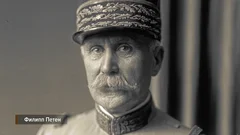
The history of fascist parties, particularly fascist movements in France, is rich and extensive. These movements were centered around three main pillars: Buekar, Driё, and the Popular-National Union of Marseille Dey. All three parties are inherently fascist in nature. France’s defeat in the summer of 1940 at the hands of Germany dramatically changed the course of World War II. No one expected that France, then the strongest European power, would lose a military campaign so quickly and so incompetently. Marshal Philippe Pétain became the head of the Vichy government. He positioned himself as a kind of father of the nation, clearly seeing himself as the President of France. Pétain’s views reflected those of a French peasant, as he was himself. He championed traditional values, conservatism, anti-intellectualism, and, of course, anti-parliamentarianism. Overall, he was a nationalist conservative. After France’s defeat, Pétain made it very clear that, from the perspective of France’s national interests, it was necessary not to lie down under the tanks. Regarding the Vichy regime, all three main fascist parties moved to the south of France. Their policies were quite similar: support for the Vichy government, unwavering loyalty, reliance on national forces, anti-Semitism, and collaboration with the Germans.
Episode 17. Baltic fascism Dubbing on request
European Fascism. Before the Court of History • 2023 • 13 minutes
During the interwar period in the Baltic countries, the history of all three Baltic republics unfolded in such a way that they all established totalitarian, authoritarian, far-right nationalist regimes. However, the paradox of the situation was that, in each of the three republics, these regimes exhibited somewhat different characteristics. This primarily depended on the extent to which fascist movements and trends influenced these regimes, both in terms of state policy and society. All fascist movements in the Baltic region, without exception, focused on populism and anti-corruption propaganda. The issue of corruption was one of the most significant problems in the Baltic countries. Additionally, there was a strong pro-Soviet movement in these nations. Historians of these countries now tend to avoid mentioning this, but it was indeed one of the main reasons for establishing dictatorships — authoritarian regimes — in these nations. The poorest segments of the population were not very pleased with the corruption and costly policies implemented by the ruling circles. Therefore, to keep the population calm, it was necessary to employ methods typical of authoritarian, quite dictatorial regimes. In Lithuania, Smetona came to power amid rising nationalism and established a dictatorial regime. He relied on the openly fascist Lithuanian Nationalist Union party. In Latvia, where Kārlis Ulmanis ascended to power, a very interesting state formation was created — one that had no analogues in Europe. This was the emergence of a form of state fascism—an unparty state of essentially fascist character. The situation was somewhat different in Estonia, the northernmost of the Baltic countries. Konstantin Päts, who was not a fascist at all but a conservative nationalist, established an authoritarian regime. He was relatively tolerant of the Soviet Union and maintained certain connections — essentially, he took bribes. This created the so-called Päts regime, which was, in fact, a national conservative regime. Overall, all these regimes were doomed to fail.
Episode 19. 'The White Man’s Burden' Dubbing on request
European Fascism. Before the Court of History • 2023 • 13 minutes
If we consider not all the features of fascism and National Socialism but only their main characteristic — primarily related to the national component, racism, and policies toward other peoples — we see that the German Nazis borrowed heavily from England and English history. Moreover, this was not hidden at all by the leaders of the Nazi regime — Hitler, Goebbels, Himmler—who, in their speeches and interactions, as documented, made references to English history and the achievements of British civilization. Essentially, the development of British society and the British colonial empire shaped the very approach to other races, which was fully adopted by Nazi ideology. This approach involved contempt for other nations. It was once clearly observed that the Anglo-Saxons were the only race on Earth that consistently destroyed others. No other nation has ever destroyed as many nations as the colonizers did. In Britain, society was ready to employ genocide, and in Germany, genocide became a state policy. Major racist postulates were developed in Britain, which the great British poet Rudyard Kipling later called "The White Man's Burden" — the idea that the white man bears the responsibility of civilizing all these peoples. This is his mission, and these peoples have only one right: to submit to the white man. Jawaharlal Nehru called this fascism at the time. He did not bother to analyze the nuances and signs; he simply said that they are two sides of the same coin. This racist theory was fully adopted by Hitler and his circle. He repeatedly returned to the idea that Germany’s policy in the East should be modeled after Britain’s policy in India. Hitler explicitly stated that only he had the strength and willpower to replicate British policies in India.
Episode 16. The Legionary Movement Dubbing on request
European Fascism. Before the Court of History • 2023 • 13 minutes
Interwar Romania occupied a unique, intrigue-filled position: it lost and then reentered World War I, ultimately gaining territory. In 1939–40, Romania lost up to a third of its land: Germany ceded a large piece to Hungary at the Vienna Awards; Romania ceded Bessarabia to the Soviet Union; and it lost other areas, plunging the country into crisis while allied with France and under pressure from Germany. Romania had a strong fascist movement since 1927, founded by Corneliu Codreanu, who had notable Roma roots. Initially called the "Garda (Michael the Archangel)", the movement’s name changed several times but eventually became known as the Legionary Movement. It was a classic fascist movement, embracing all core fascist principles, including foreign expansion to reclaim lands inhabited by Romanians and to create Greater Romania — territories that included parts of the Soviet Union such as Odessa and Bessarabia. Romania’s movement uniquely linked the nation’s spiritual rebirth to Orthodox Christianity.
Episode 15. The Arrow Cross Dubbing on request
European Fascism. Before the Court of History • 2023 • 13 minutes
In interwar Europe, there was a state with an unclear status. This was Hungary, which arose from the remnants of the Austro-Hungarian Empire. However, it was a newly formed state that emerged after World War I, yet it turned out to be a defeated country in that war. Being a kingdom, this country did not have a king. Therefore, as early as March 1920, a regent was elected for this kingdom — Admiral Miklós Horthy. He was the person who had been the last commander of the Austro-Hungarian Navy in the Adriatic. As a result, a sort of entity appeared that in Europe was jokingly called “a kingdom without a king, an admiral without a fleet”. Nonetheless, at the beginning of its existence, Hungary suffered a significant blow in the form of the Hungarian Soviet Republic, when Hungarian communists led by Béla Kun unleashed serious terror on its territory. They were defeated primarily by Romanian troops and Hungarian volunteer units led by Miklós Horthy himself. Miklós Horthy was a Hungarian nationalist. He was, of course, a conservative and a monarchist—shaped by the previous era m aking him an ideal authoritarian leader for a small European country. Moreover, after World War I, Hungary lost up to two-thirds of its territory. Overall, the Hungarian people considered themselves unfairly deprived and humiliated. At the same time, Horthy pursued a policy of balancing between Germany and the Allied countries. The situation was complicated by another factor: during the interwar period, Nazi and fascist movements began to actively emerge in Hungary. These movements were primarily oriented toward Nazi Germany. The rise of fascist groups within Hungary greatly worried Horthy, who was very critical of this development because he understood very clearly that it could threaten his power. Many groups were formed, including at least three National Socialist parties, with names like the National Socialist Party, the National Socialist Peasant Party, and the National Socialist Workers’ Party. However, these were quite small and marginal. In 1935, a powerful fascist movement began to organize, led by Ferenc Szálasi, a colonel in the Hungarian army. This movement adopted the name "Crossed Arrows", or "Nyilas" in Hungarian. The party immediately and actively intervened in politics, positioning itself essentially as a copy of the Nazi Party in Germany.
Episode 14. The Italian Empire Dubbing on request
European Fascism. Before the Court of History • 2023 • 13 minutes
The essence of the Italian regime contained two main elements. First was the creation of a “new” Italian. Mussolini argued that the existing Italian was unsuitable for a great Italy — too passive, weak, and cowardly — and needed to be forged into a new Italian who would revive Rome’s greatness in a fascist guise, with Mussolini as Caesar leading Italy toward its glorious future. Second was expansion. Mussolini declared Italy the heir of the Roman Empire and aimed to create a Greater Italy — encompassing parts of southern France (the Riviera), Italian-speaking regions of Switzerland, most of the Balkans along the Adriatic — including Serbia — and colonies in North Africa. Essentially, he sought to establish a Roman Empire without the Near East, which Mussolini felt he could not manage. Mussolini engaged in repeated military adventures that exhausted Italy, which lacked the resources for such expansion. Fascism inherently pursues foreign expansion. Fascism is war. A fascist state cannot develop without conducting external conflicts, since it would be impossible to gain resources to feed the ever-growing ambitions of fascism.
Episode 13. The Birth of Fascist Italy Dubbing on request
European Fascism. Before the Court of History • 2023 • 13 minutes
After the war, Italian researchers, historians, politicians, and sidelined Italian fascists did much to promote the myth that a fascist movement did not truly exist. There is a fascist regime in Italy — Benito Mussolini's dictatorship — and the Nazi regime in Germany. However, these are two very different and unrelated phenomena. Many interwar European fascist movements similarly went to great lengths to explain that a nationalist regime does not equal fascism, and that they had nothing to do with the latter. That myth was so actively imposed that, for a while, it became almost canonical. However, it has since been revised, and these regimes are now collectively regarded as “fascist”. The fascist regime, party, and movement were all founded by Benito Mussolini. He suppressed communist and labour movements, effectively eliminated class struggle in Italy, and created corporatism — organizing society by profession rather than by class. He also had to reckon with Catholicism and the formal head of state, Victor Emmanuel.
Episode 12. The Second Polish Republic Dubbing on request
European Fascism. Before the Court of History • 2023 • 13 minutes
Perhaps no other country of interwar Europe matched the expansionist character of the Second Polish Republic (1918–1939). From its inception Poland was highly expansionist — more so than other states formed from the ruins of great empires, and it often succeeded. Looking at the interwar map, Poland had armed conflicts with all its neighbours and managed to seize territory from every single one of them: Vilnius (now Lithuania’s capital), Western Ukraine, Western Belarus (territory that had not historically belonged to Poland). Silesia also got under Poland's control. Territorial problems with neighbours were present along all Poland’s borders from the start.
Episode 11. Satellites of fascism Dubbing on request
European Fascism. Before the Court of History • 2023 • 13 minutes
In the interwar period, fascist movements spread across Europe. During World War II, many Central and Southeastern European countries came under so-called fascist satellite regimes — those that would not have emerged without occupation, whether de facto or formal. These countries were often in dire straits: multinational states torn by interethnic conflicts or monoethnic states with weak state structures and economies, such as Albania and Greece. Overall, these tensions created fertile ground for strong and widespread support for fascist regimes in those countries.
Episode 10. Adolf Hitler Dubbing on request
European Fascism. Before the Court of History • 2023 • 13 minutes
Hitler had charisma and political instinct — qualities many later described as demonic. He combined innate eloquence with a good memory and political intuition, and he could convince himself of what he wanted to believe. When addressing crowds, he spoke as a convinced man. He drew energy and pleasure from his audiences, and his charisma hypnotized people. Asked about this, Hitler dismissed it, saying he only articulated what Germans already thought — that he expressed the hopes of the ordinary German after World War I. As the leader of the country, he pursued goals he deemed necessary. Early in his career, Hitler formulated and made party doctrine his racial theory: he absorbed many existing racist tendencies and created his own form of racism, which became the foundation of society. He identified the Jew as the main enemy and promoted the idea that history was a conspiracy aimed at expelling Jews and building a society dominated and created by the German people.
Episode 9. Nazi society Dubbing on request
European Fascism. Before the Court of History • 2023 • 13 minutes
The Nazis acted in every direction and made breakthrough moves that were historically disastrous. For peasants, they adopted the “blood and soil” ideology, declaring peasants the essence of the German people — those who work the land and draw the blood that constitutes the nation. They enacted laws on hereditary peasant farms and addressed unemployment by expanding the Wehrmacht and military industry, which absorbed growing labour. These measures instilled confidence in the future among such groups. However, in return, they took everything: they instituted the Führerprinzip in factories, making the factory owner the Führer who decided everything without trade-union consultation. Across all segments of the population, Nazi policy was consistent: providing social benefits — often more than in contemporary Western capitalist societies — in exchange for the total surrender of civil rights. People receiving social benefits were expected to listen to, read, and discuss Nazi propaganda and to report others to the authorities if necessary.
Episode 8. The Nazi Party Dubbing on request
European Fascism. Before the Court of History • 2023 • 13 minutes
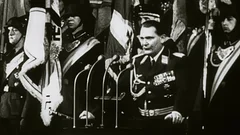
The Nazi Party — NSDAP — never truly wanted to call itself a party. Instead, it styled itself as a movement: a powerful, popular force unbound by traditional party structures. The movement was not meant to have typical features such as a collective leadership, central committee, or executive committee — none of that, because it was a movement. A movement must have only a leader who drives it forward, with everyone following him. Ideology constantly weighed on the German populace and was closely monitored; every German knew that a party official was nearby, ready to report if anything happened. Consequently, public criticism was rare — anyone who voiced dissent immediately attracted the attention of party officials and law enforcement. Despite outward chaos, Hitler’s party system allowed the Nazi Party to exert complete control over German society.
Episode 7. Racial theory Dubbing on request
European Fascism. Before the Court of History • 2023 • 13 minutes
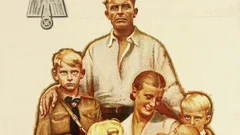
One of the most important components of Nazi ideology was racial theory. When we talk about fascism, we primarily mean nationalism; when we speak of National Socialists, we can clearly state that their ideology was racist. For German society, the transition from nationalism to racism was quite traditional, dating back to the early 19th century during the Wars of Liberation against Napoleon, when Germany freed itself from foreign rule and strong nationalist tendencies arose. The ideology associated with Germans seeing themselves as one people scattered across many small states sought to unify them under an overarching national theory. This led to the so-called völkisch movement — völkisch meaning not just popular but folk-national: the people as a biological entity and the superiority of the German people over others. The theory held that the Aryan race, representing ancient Germanic peoples, was the only nation that preserved its core unmingled with others, maintaining its language, culture, traditions, and racial purity, while other countries were populated by mixed peoples. According to this view, other nations progressed historically thanks to German racial influence.