World War II
- История
- 22 episodes
- 2019-2026
We tell little-known pages of the history of World War II. Unique archival documents, eyewitness memoirs, letters, photographs, and rare archival newsreel reveal the flip side and the mysteries of many events of that time.
Hosts



Episodes
Movie 20. The Battle for Africa Dubbing on request
World War II • 2022 • 44 minutes
On June 20, 1942, German and Italian forces invaded British-held Egypt. Their objective was the Suez Canal. When the British defenses faltered, panic broke out in Alexandria and Cairo. Local shopkeepers prepared portraits of Hitler to hang in their shops upon the Germans’ arrival. British officials in Cairo began burning secret documents. This day went down in history as “Ash Wednesday”. The battle for Egypt became the culmination of military operations in Africa during World War II. In total, the campaign on that continent lasted nearly three years.
Movie 17. The Battle of Berlin Dubbing on request Subtitles available (Russian)
World War II • 2022 • 44 minutes
The storming of Berlin lasted 10 days. It was one of the quickest battles for taking a huge, well-fortified city during World War II. On May 8, 1945, the streets of Berlin’s Karlshorst district were blocked by Soviet patrols. Late in the evening dozens of military personnel, journalists, and cameramen gathered in the building of the former sappers’ school. Any moment the signing of the unconditional surrender of Nazi Germany was to take place there. A total of 80,000 Red Army soldiers died in the battles for Berlin, most of whom are buried on German soil. In 1992 the German government undertook to care for all monuments to Soviet military glory located in the country. Since the collapse of the Soviet Union and the socialist bloc, Germany has remained one of the few European countries where not a single memorial to the Soviet liberating soldiers has been torn down.
Movie 22. The Battle of the Dnieper Dubbing on request Subtitles available (Russian)
World War II • 2022 • 44 minutes
In September 1943, the advancing Soviet troops reached the left bank of the Dnieper. On the opposite bank the Germans had constructed a powerful defensive line. On the night of September 21, under cover of darkness, thousands of our soldiers entered the icy water, moving by boat and makeshift rafts. The water literally boiled under enemy machine-gun fire. Only every third Soviet soldier managed to reach the far bank. Thus began the grand Battle of the Dnieper. The Battle of the Dnieper became one of the largest engagements in history. More than four million people took part — more than in any other battle of World War II.
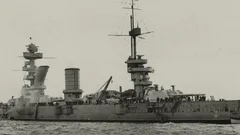
Movie 21. The Siege of Leningrad Dubbing on request
World War II • 2022 • 44 minutes
On August 27, 1941, tens of thousands of Soviet refugees gathered in the port of Tallinn. The day before, the Baltic Fleet had been ordered to leave the city at once and break through to Leningrad. The Germans had already captured much of Estonia. The passage of our ships from Tallinn to Leningrad turned into a terrible tragedy. Luftwaffe planes attacked them in the Gulf of Finland. One hundred sixty-three vessels were sunk. Eleven thousand people died. At that moment a mortal danger hung over Leningrad. Hitler ordered it to be wiped off the face of the earth. The Battle for Leningrad became the longest defense of a large city in the history of World War II. It lasted two years, four months, and ten days. It is a unique case: there has been no other instance in history of a multi-million city surviving 900 days under blockade — losing perhaps a million people — yet not surrendering.
Movie 19. The Assault on Budapest Dubbing on request
World War II • 2022 • 44 minutes
February 1945. Fierce final battles are raging in Budapest. Driven by our troops into the labyrinths of the Buda fortress, German and Hungarian soldiers fought back desperately with close-range fire. Our artillery and air force tried to level the fortress, but the deep casemates withstood every blow. When German ammunition began to run out, they attempted a breakout. Their attack, however, drowned in a sea of our fire. A few hours later Moscow received the long-awaited telegram — Budapest had been taken. The assault on Budapest lasted 102 days. Every day more than a thousand people died in the streets of the Hungarian capital. In no other European city had the Red Army yet encountered such desperate and tenacious resistance.
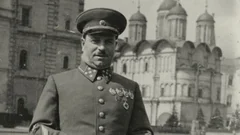
Movie 18. The Battle for the Caucasus Dubbing on request
World War II • 2022 • 44 minutes
On November 5, 1942, the residents of the city of Ordzhonikidze — now Vladikavkaz — were raised on alert. Forward German units broke into the village of Gizel. From there they had only eight kilometers to the center of Ordzhonikidze. But the Germans failed to take the city. Hitler put everything he had into this strike. The goal was to destroy the Soviet Union and force it out of the war. The Battle for the Caucasus lasted 442 days and ended in our victory!
Movie 16. The Defense of Sevastopol Dubbing on request
World War II • 2022 • 44 minutes
On April 5, 1942, Adolf Hitler signed Special Directive No. 41. In it he ordered the main forces of the Wehrmacht to turn south and seize Stalingrad and the Caucasus as quickly as possible. But the Germans could not carry out the Führer’s plan immediately. The Soviet Crimea remained a persistent thorn in the German army’s side. Besieged Sevastopol tied down an entire German army. The Germans had to throw every available reserve into its assault. The battles for the main base of the Black Sea Fleet became a true nightmare for them. The defense of Sevastopol lasted 250 days. No city in Europe was besieged by the Germans for so long. Enraged by the defenders’ stubbornness, the Nazis decided to wipe Sevastopol off the face of the earth.
Film 15. The Battle for Moscow Dubbing on request Subtitles available (Russian)
World War II • 2022 • 44 minutes
On October 3, 1941 Adolf Hitler addressed Germans in another pompous speech, claiming a new eastern offensive would lead to the total and final destruction of Russia. German troops had been ordered to encircle Moscow; the Führer ordered that their coming victory be immortalized in stone. Red granite and white marble were sent from Germany to the Moscow region, ceremonial uniforms for a triumphal Wehrmacht march on Red Square were ordered. But the Germans failed to take Moscow. Soviet command took unprecedented measures to counter them. The Battle for Moscow lasted 203 days, across an 800-kilometer front. Since the beginning of World War II Europe had not yet seen such grand battles; it was the first serious defeat for the Germans since their victorious advances from 1939.
Film 14. Stalingrad Dubbing on request Subtitles available (Russian)
World War II • 2022 • 44 minutes
The Battle of Stalingrad was the bloodiest engagement in human history. Along the narrow strip of the Volga bank two million people clashed in mortal combat. The Battle of Stalingrad can be considered the pivotal engagement that changed the course of World War II. On February 18, 1943 Joseph Goebbels gave a speech in Berlin’s sports palace calling for total war to the bitter end. The speech lasted more than two hours and was broadcast live across Germany. Goebbels left the podium three kilograms lighter. His desperate appeal followed the heavy defeat at Stalingrad, when the Reich’s leaders first sensed an existential threat.
Film 13. Operation 'Bagration' Dubbing on request Subtitles available (Russian)
World War II • 2022 • 44 minutes
In the Belarusian forests the Red Army inflicted the greatest defeat on Germany in its history: an entire group of Wehrmacht armies of nearly one million men was completely destroyed. 'Bagration' shortened the war by months. After the German defeat near Minsk Soviet forces began liberating the Baltics. On July 13 Vilnius was cleared of the Germans. In the north Soviet units reached the Baltic Sea; to the south the Second Belorussian Front reached the prewar borders of the USSR. All objectives of Operation 'Bagration' were fully achieved. In short, 'Bagration' was a huge victory for the entire anti-Hitler coalition.
Film 9. The Winter War Dubbing on request
World War II • 2019 • 44 minutes
November 1939. World War II has already been underway in Europe for two months. Finland had long prepared for war with the Soviet Union. Thirty kilometers from Leningrad the Finns built a powerful fortified region — the 'Mannerheim Line,' rumored to be impregnable. On November 30, 1939 the Red Army received orders to attack Finnish pillboxes. Western powers blamed the Soviet leadership for starting the war. But was that really the case? How did the Red Army manage to take the strongest defensive line in Eastern Europe? Why did Western powers plan attacks on the USSR? And how did Finland avenge its defeat in the Winter War?
Film 12. Russians Against Russians Dubbing on request
World War II • 2019 • 44 minutes
On June 23, 1941 the world press stunned the planet with sensational news: Nazi Germany attacked the Soviet Union without declaring war. In many German-occupied European cities mass demonstrations in support of the Wehrmacht took place. Tens of thousands of volunteers, driven by anti-communist zeal, came to German recruitment centers, including people from the former Russian Empire. How many Russian volunteers served in the Wehrmacht? How did the Germans use Eastern units in the rear and at the front? And what punishment did collaborators receive after the war?
Film 11. The Kursk Breakthrough Dubbing on request
World War II • 2019 • 44 minutes
In early 1943, after Stalingrad, the Red Army captured tens of thousands of German soldiers. But Germany remained strong. An enraged Hitler demanded the destruction of Soviet forces around Kursk. Preparations for the offensive lasted three months, and nearly Germany’s entire military power was concentrated at Kursk. On July 5 German tank columns advanced. Thus began the largest battle of World War II. The Battle of Kursk lasted 49 days and involved over 2 million soldiers and about six thousand tanks — unprecedented in the history of warfare. How did the Red Army defeat Germany’s elite divisions? Why did Hitler finally lose the war at Kursk? And why didn’t new tanks and aircraft help him?

Film 10. The Perfect Assault Dubbing on request
World War II • 2019 • 44 minutes
During World War II the city of Königsberg, fortified over eight centuries, was considered impregnable by the Germans. In February 1945 Soviet forces began preparing to storm Königsberg. The assault lasted four days and became the swiftest operation to capture a major city during World War II. More than seventy thousand German soldiers were taken prisoner. How did the Red Army take Europe’s strongest fortress? Why was Hitler shocked by the fall of Königsberg? And what became of the city’s inhabitants after the war?
Film 8. The Eight-Year War Dubbing on request
World War II • 2019 • 44 minutes
On July 7, 1937 the Japanese Imperial Army invaded eastern provinces of China. Thus began the eight-year occupation of China accompanied by unprecedented looting and atrocities. According to Japanese command plans, China was to become another colony of the Empire and its population destined for slavery. The brutality of the Japanese in occupied China shocked the world. Seventeen million Chinese soldiers fought the invaders. How did the Chinese people resist Asia’s strongest army? What help did world powers provide to China? And what punishment did Japanese war criminals receive after the war?
Film 7. The August Storm Dubbing on request
World War II • 2019 • 44 minutes
On May 7, 1945 Nazi Germany signed the act of unconditional surrender. But World War II did not end there. In Asia and the Pacific the Japanese Empire continued fierce fighting with the Allies. On August 9 Soviet forces attacked Japanese troops in Northern China. The results of our operation stunned the world. The million-strong Kwantung Army was defeated in three weeks. In Manchuria the Red Army encircled and captured 640,000 Japanese soldiers. On September 2, 1945 the Japanese command signed the act of surrender. How did Soviet forces defeat Asia’s strongest army? On what terms did Japan surrender? And how did Manchuria’s residents greet the Red Army?
Film 6. Generalplan Ost Dubbing on request
World War II • 2019 • 44 minutes
On September 1, 1939 Nazi Germany attacked Poland. By October 6 the last elements of the Polish army had capitulated. Two days later Hitler signed a decree annexing Polish lands to Germany and their subsequent colonization. This action was part of the 'Generalplan Ost' the Nazis developed before the war. The plan envisaged occupation and devastation of Eastern Europe and the Soviet Union as far as the Urals. These lands were to become the Third Reich’s new Lebensraum. What would have happened to our country if Hitler had won World War II? Which parts of the Generalplan Ost were implemented? And who bore responsibility for these war crimes?
Film 5. Reich Gold Dubbing on request
World War II • 2019 • 44 minutes
On May 10, 1940 German troops invaded France, advancing through Belgium and the Netherlands. By June 22 France was occupied and Wehrmacht columns entered Paris. The Germans looted thousands of tons of gold, raw materials, nearly all military equipment and ammunition from conquered countries. French military factories now worked for the Wehrmacht, and residents of occupied cities were mass conscripted into the German army. Hitler prepared to invade the Soviet Union. During World War II neutral countries even provided economic assistance to Germany, and five independent European states became direct allies of Hitler. Why did many European countries side with Hitler? What help did neutral countries give Germany? And how did the Nazis use the stolen gold?

Film 4. The Pact Dubbing on request
World War II • 2019 • 44 minutes
On August 23, 1939 the German foreign minister Joachim von Ribbentrop flew to the Soviet capital. That same day a Soviet–German agreement was signed in the Kremlin. The USSR and Germany agreed not to attack one another. In the West the USSR was accused of allying with Nazism and bearing equal responsibility for starting World War II. But was that true? Why did Stalin agree to terms with Hitler? What were the conditions in the secret protocols to the pact? And is it true that the Soviet government’s main aim was to occupy Eastern European countries?
Film 3. Lend-Lease Dubbing on request
World War II • 2019 • 44 minutes
By early 1941 most of Europe was occupied by Nazi Germany. Poland was defeated in weeks, and Belgium, the Netherlands, France, Norway and Denmark were seized. The Luftwaffe bombed Britain daily. In this situation the United States decided to help the Allies. On March 11, 1941 President Roosevelt signed the Lend-Lease Act — economic aid to countries fighting Hitler. Six months later the program was extended to the USSR. During the war, despite hardships and mortal danger, American convoys delivered millions of tons of military supplies, thousands of tanks, planes and vehicles to the Soviet Union. What role did American aid play for the USSR? When did Russia settle its Lend-Lease debts? And how did the program affect the U.S. economy?