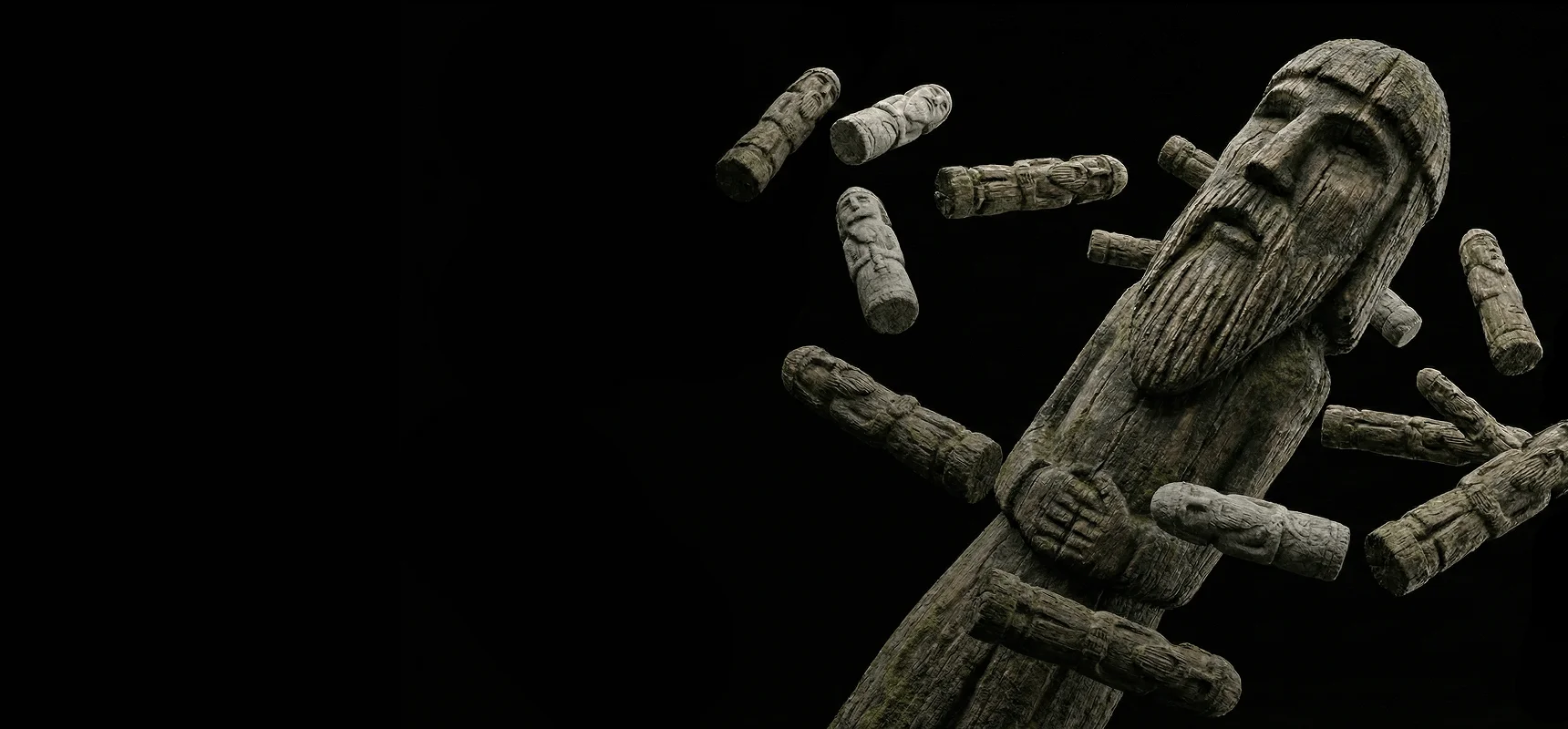
Russian Time. Conversations on History with Nikolay Borisov
- История
- 5 episodes
- 2023
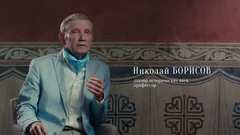
A series of video lectures read by Doctor of Historical Sciences, professor of the Department of Russian History up to the early 19th century at the History Faculty of Lomonosov Moscow State University, Nikolay Sergeevich Borisov. In these lectures, he discusses the fundamental principles on which Russian statehood, culture, economy, and the church were built.
Hosts

Episodes
People and Power Dubbing on request
Russian Time. Conversations on History with Nikolay Borisov • 2023 • 26 minutes
Russian philosopher Vladimir Solovyov once said that our autocracy is a dictatorship of conscience. This means that, in addition to political power, our rulers bear another moral responsibility — the moral responsibility of the tsar-father, the tsar as father. Our autocrat, therefore, is a person with a profound sense of responsibility. Throughout history, our autocrats have been different individuals — some intelligent, others less so — but all felt that the country was behind them, and with it, they carried a sense of responsibility. Thus, there exists a peculiar double sense of political and moral responsibility. Looking at our historical past, we observe a certain system through which our political existence has developed. It is a triangle, whose corners are the monarchy, the aristocracy, and the people.
Russian Orthodoxy Dubbing on request
Russian Time. Conversations on History with Nikolay Borisov • 2023 • 26 minutes
The history of the early centuries of Christianity in Russia is full of mysteries. The adoption of Christianity was a significant step forward for Old Rus', as behind that Byzantine tradition lay the heritage of antiquity, which was essential for our cultural existence. The recognition of Christianity as the state religion led to a situation similar to what occurred here in the 1990s, when many people exploited various posts and sources of income under the pagan emperor — nobles of a pagan nature. Now, Christianity is permitted. Those who had previously been persecutors now appear in the opposite role. In other words, a revaluation of values and people is taking place. The monastery is a special phenomenon in the history of the church and the state because monasteries not only housed monks in their cells but sometimes became centers of culture. The role of Orthodoxy in the life of the Russian people is quite complex. However, there is a view that Orthodoxy is not limited to church walls, routine services, or fasting. Orthodoxy is a system of values — values passed from father to son. It does not necessarily consist of explicit moral teachings; it can be conveyed through conversations, fleeting gestures, or behaviours that often go unnoticed at a subconscious level.
The Russian Peasant Dubbing on request
Russian Time. Conversations on History with Nikolay Borisov • 2023 • 26 minutes
The peasant is a multilayered concept that emerged in a specific historical context. Peasants appeared roughly in the 14th century, coinciding with a national revival linked to the struggle against the Tatar-Mongol yoke. This national awakening unfolded under religious banners, led by prominent figures such as Saint Sergius of Radonezh and Metropolitan Alexey. It was a revival carried out under the banner of Orthodoxy, aiming to find a unifying value: Christians, a people united by land and faith. For Russia, which remained an agrarian society until the mid-20th century, Christian labor and Christian life were foundational. Peasants could not live without landowners, and landowners could not live without peasants.
Russian Princes Dubbing on request
Russian Time. Conversations on History with Nikolay Borisov • 2023 • 26 minutes
Our country faces many disadvantages from a geographical standpoint. One might even say that geography is our main enemy. Russia has struggled with this adversary for many centuries. But what does it mean to say that geography is our enemy? Primarily, it means we inherited a number of problems from the past linked to our geography: the eternal struggle with the steppe and the nomads who came in waves from Asia. After Monomakh’s death, feudal fragmentation appeared, resulting in a large number of principalities. Among them, three stood out: first, Vladimir–Suzdal; second, Novgorod — the boyar republic; and third, the Galicia–Volhynia principality. This feudal fragmentation continued until the late 15th century, when Ivan III unified the territory. Historically, feudal fragmentation was progressive, as it created new opportunities for the development of feudal relations. It led to the rise of new feudal centers and the growth of the idea of private land ownership.
History and Historians Dubbing on request
Russian Time. Conversations on History with Nikolay Borisov • 2023 • 26 minutes
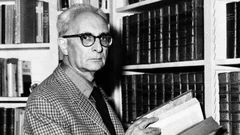
History helps us better understand not only the past but also the present. It is a coordinate system in time: time existed first, and there is such a thing as the infinity of time. Sergey Mikhailovich Solovyov once said that, of all sciences, history alone is a political subject. History is memory, which is absolutely essential for human existence. Memory must be preserved and cultivated. Why? Because through memory, we maintain our orientation in the space of history and time. For any historian, the primary element is the source. A true historian should never say, "I know how it really was". Who truly knows how it really was? Therefore, history must be accurate, but it must serve two masters, as they say: science and politics.