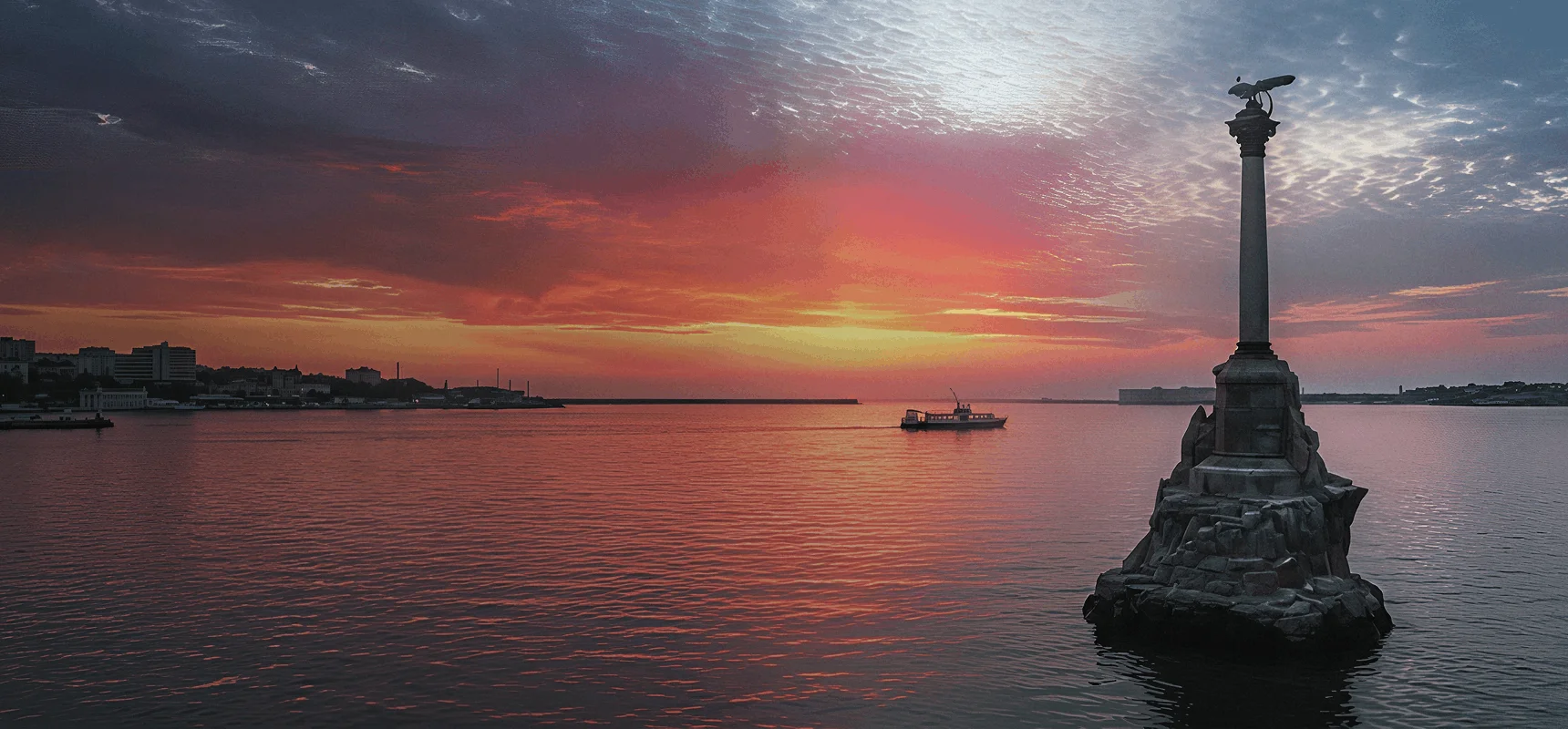
Sevastopol. Crimea. Russia
- История
- 20 episodes
- 2024
The video lecture series is devoted to the most significant and interesting issues in the history of Crimea and Sevastopol, from ancient times to the present day. The lecturer is Vadim Khapaev, a Candidate of Historical Sciences and an associate professor in the Department of World History and World Culture at Sevastopol State University.
Hosts

Episodes

Reunification of Crimea with Russia Dubbing on request
Sevastopol. Crimea. Russia • 2024 • 13 minutes
Since the collapse of the USSR, Crimea has fought for its right to determine its own fate. Consequently, Crimea and Crimeans have been deeply hated in Ukraine. Since the 1990s, it was derisively called a communist stronghold. Crimeans refused to receive Ukrainian passports until the very end, even though, in August 1991, they had been declared citizens of Ukraine by default. Ultimately, on March 17, 2014, the Russian Federation recognized the independence of the Republic of Crimea. The following day, on March 18, a treaty was signed on the accession of the Republic of Crimea and the city of Sevastopol to the Russian Federation, establishing two new federal subjects.
Crimea and the Collapse of the USSR Dubbing on request
Sevastopol. Crimea. Russia • 2024 • 13 minutes
The era of perestroika and the subsequent collapse of the USSR marked another extremely difficult chapter in Crimea’s history. In 1990, the Verkhovna Rada of the Ukrainian SSR, for the first time elected through a competitive process, began its work by adopting a law on languages in the Ukrainian SSR, proclaiming Ukrainian as the sole state language. This move sparked a strong movement in Crimea to reunify with Russia, as it became clear that the national rights and interests of Crimeans — more than 75% of the peninsula’s population being ethnic Russians — would not be adequately protected in the new Ukraine.
The Yalta Conference Dubbing on request
Sevastopol. Crimea. Russia • 2024 • 13 minutes
The Yalta Conference of 1945, where the fates of the postwar world were decided, was held in Crimea not by chance. Besides being advantageous and expedient from a logistical and geopolitical standpoint, it also reflected a long-standing tradition. Thanks to the Yalta Conference of the victorious powers’ leaders, Crimea once again entered world history as a bright star. Major questions regarding the postwar order — not only in Europe but also in Asia — were addressed at Yalta during sessions held at the Livadia Palace.
Crimean Offensive Operation Dubbing on request
Sevastopol. Crimea. Russia • 2024 • 13 minutes
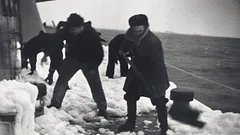
The prerequisites for liberating Crimea were established after our victories at Stalingrad and the successful counteroffensive in the Caucasus. By the fall of 1943, Hitler had already begun to fear that the Russians would retake Crimea and that our air raids would once again threaten the Romanian oil fields. Our troops also recognized the value and importance of reclaiming Crimea. Thus, the first attempt to retake Crimea through a direct assault was made in November 1943. The Crimean strategic offensive operation of April–May 1944 entered history as the third Stalinist strike. It was extraordinarily well prepared and brilliantly executed.
The Kerch Landing Dubbing on request
Sevastopol. Crimea. Russia • 2024 • 13 minutes
After the successful Soviet counteroffensive near Moscow, the front advanced westward across various sectors. Consequently, the Soviet command launched different offensive operations, one of which aimed to liberate the Crimean Peninsula and lift the siege of Sevastopol. This largely successful operation was known as the Kerch–Feodosiya landing.
Transfer of Crimea to the Ukrainian SSR Dubbing on request
Sevastopol. Crimea. Russia • 2024 • 13 minutes
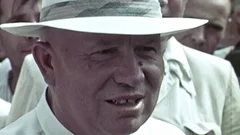
The transfer of Crimea from the RSFSR to the Ukrainian SSR was not only a significant historical mistake but also, in essence, a criminal act that violated the laws then in force within the USSR and the RSFSR.
Defense of Sevastopol (WWII) Dubbing on request
Sevastopol. Crimea. Russia • 2024 • 13 minutes
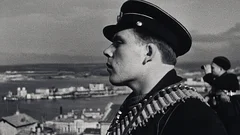
The second heroic defense of Sevastopol, which began on October 30, 1941, became one of the key strategic defensive operations of the Great Patriotic War. The defense of Sevastopol significantly delayed the German advance on the Caucasus, tied down the forces of one of Germany’s most successful formations, the 11th Army, and temporarily enabled the liberation of the Kerch Peninsula at the end of 1941. Furthermore, it held great ideological significance, as the defense of Sevastopol during the Great Patriotic War was compared to its defense during the Crimean War.
The Battle for Crimea Dubbing on request
Sevastopol. Crimea. Russia • 2024 • 13 minutes
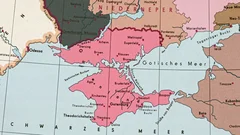
Since the beginning of the 20th century, the Germans regarded the possession of Crimea as one of their strategic objectives. When they first occupied the Crimean Peninsula in 1918, they already considered it an incomparable geopolitical position. They viewed Crimea as a springboard for attacks on the Caucasus, for control of the Caucasian oil fields, as an airbase to prevent Soviet forces from bombing the only oil fields available to the Germans in Romania, and as a potential resort for German officers. Additionally, they perceived the Black Sea as a future training base for the German navy, which was to fight for control of the Indian Ocean.
Pyotr Wrangel Dubbing on request
Sevastopol. Crimea. Russia • 2024 • 13 minutes
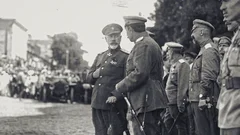
Pyotr Nikolaevich Wrangel was one of the generals of the Volunteer Army and participated in the events around Tsaritsyn. He later disagreed with Anton Ivanovich Denikin, left the Russian army, and went to Constantinople. However, when Denikin’s Volunteer Army began to suffer defeats, a military council decided that Pyotr Nikolaevich Wrangel should be appointed commander-in-chief of the Volunteer Army. Denikin left, Wrangel arrived, and for several months, he led the remnants of the White movement. He did so not merely for show — he genuinely attempted to implement a project that the French called "the Russian venture".
The Red Resort Dubbing on request
Sevastopol. Crimea. Russia • 2024 • 13 minutes
From the second half of the 19th century, Crimea became famous in Russia as the first seaside health resort. Under the tsarist regime, this resort was quite elite. In fact, it began when Alexander II and his successors transformed Crimea into their summer residence. Following the emperor, other members of the imperial family, representatives of the Russian gentry, and the major bourgeoisie began buying land and building mansions. Crimea had a prominent aristocratic season in late spring and early autumn. There was a more modest season for the public during the height of the hot summer. In any case, under the tsars, Crimea was certainly not a proletarian or peasant resort.
The Crimean War: An Optimistic Tragedy Dubbing on request
Sevastopol. Crimea. Russia • 2024 • 13 minutes
Итоги Крымской войны очень по-разному оцениваются и в обществе, и в отечественной историографии. Очень часто приходится слышать и читать о том, что это была позорная война, позорное поражение царского режима, это было написано и историками, и пропагандистами еще в Российской империи, вскоре после войны, затем это подхватили большевики. Но действительно ли это было так?
The Siege of Sevastopol Dubbing on request
Sevastopol. Crimea. Russia • 2024 • 13 minutes
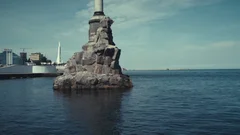
The defense of Sevastopol in 1854–55, which lasted 349 days, entered Russian history as an age of heroes. The Crimean War, in terms of the number of heroes it produced and contributed to Russian history and national consciousness, can perhaps be compared only to the Patriotic War of 1812. However, whereas the Patriotic War unfolded across a vast front, the defense of Sevastopol was confined to a very small territorial sector: a city pressed against the sea and protected by a defensive line only seven kilometers long, along which the most significant events took place.
Sevastopol and the Russian Revolution Dubbing on request
Sevastopol. Crimea. Russia • 2024 • 13 minutes
Sevastopol’s role in the history of the revolutionary movement in Russia is very significant. It began as early as 1905, when two emblematic, though unsuccessful, events of the first Russian revolution were first the mutiny on the battleship Potemkin and then the uprising on the cruiser Ochakov. Although they were suppressed, revolutionary sentiments in Sevastopol were strong. This manifested clearly in 1917 when the February revolution began the Great Russian Revolution.
The Crimean War as a Turning Point Dubbing on request
Sevastopol. Crimea. Russia • 2024 • 13 minutes
The Crimean War is one of those wars that people initially tried to forget quickly. As a result, by the 20th century, its global significance was no longer widely understood. In fact, it was a turning point of an era. Today, it is increasingly referred to as the zero-th world war, although it could also be justified to call it the Second World War of the 19th century, considering that the series of Napoleonic Wars was also essentially a global conflict. Hostilities unfolded not only in the Black Sea theater but also in the Baltic, White Sea, Barents Sea, and Pacific. From the standpoint of the objectives of the participants, geography, military and human forces, and the economic resources involved, it was unquestionably a global conflict.
Grigory Potemkin Dubbing on request
Sevastopol. Crimea. Russia • 2024 • 13 minutes
Potemkin’s role in the history of Crimea is exceptionally great, yet very little is known to the public. Mainly we know about 'Potemkin villages' and that Potemkin had the title Potemkin-Tauride. But why did he receive that title? Why was Potemkin’s role in the annexation of Crimea to Russia and in the beginning of the further organization of Russian Taurida so key and decisive?
Admiral Ushakov Dubbing on request
Sevastopol. Crimea. Russia • 2024 • 13 minutes
In 2001, the Russian Orthodox Church canonized the outstanding Russian admiral Fyodor Fyodorovich Ushakov as the Righteous Warrior Saint Theodore. Today, an icon of Fyodor Fyodorovich Ushakov is displayed on almost every ship and in nearly every unit of the Black Sea Fleet. This attests to the significant contributions he made toward the creation, development, and strengthening of Russia’s naval power on the shores of the Black Sea.
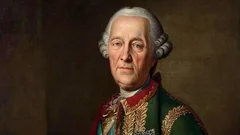
Annexation of Crimea to the Russian Empire Dubbing on request
Sevastopol. Crimea. Russia • 2024 • 13 minutes
The Crimean Khanate, part of the Ottoman Empire, was a dangerous neighbour to the Russian Empire. The Treaty of Küçük Kaynarca, concluded after the war of 1774, marked the gradual weakening of Turkish power. The document recognized the khanate’s independence, and lands between the Southern Bug and the Dnieper were secured for Russia. On April 8, 1783, Catherine signed a secret manifesto on the annexation of Crimea, Kuban, and Taman Island to the Russian Empire; it was made public only at the end of June 1783, when an important representative assembly of the Crimean people — the Council of the Whole Land — took place in Crimea.
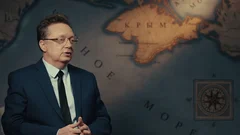
Crimea in Russian History Dubbing on request
Sevastopol. Crimea. Russia • 2024 • 13 minutes
First and foremost, Crimea for Russia is a sacred space. Crimea is the territory where Prince Vladimir was baptized and where he was wed to the Byzantine princess Anna. This became, on the one hand, the beginning of the Christianization of Rus', and on the other hand the transformation of Rus' into one of the major medieval powers, which since then established diplomatic relations with the surrounding world and was perceived by others as a full-fledged Christian state.
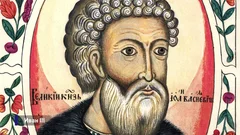
The Crimean Khanate Dubbing on request
Sevastopol. Crimea. Russia • 2024 • 13 minutes
The Russian state centered in Moscow and the Crimean Khanate were formed through an alliance. They shared a common enemy and a common goal. The enemy was the Golden Horde, which controlled both the Russian lands and Crimea — the Crimean ulus — and it began to disintegrate. Starting in 1395, the hereditary rulers of the Crimean ulus began to struggle for independence from the Golden Horde. Therefore, objectively, in the 15th century, Crimea and the emerging Russian state were allies in the fight against a common suzerain from whom they sought to break free.
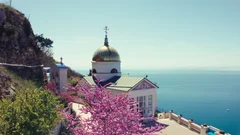
Christianity in Crimea Dubbing on request
Sevastopol. Crimea. Russia • 2024 • 13 minutes
Crimea is one of the oldest Christian lands on the planet. Tradition links the introduction of Christianity in Crimea to apostolic times. As early as the 6th century, a legend was recorded that the fourth Roman pope, Clement — who had been exiled by Emperor Trajan — preached there; he was a disciple of the apostles Peter and Paul and was personally ordained a bishop by the apostle Peter. Later, in the 9th century, a legend arose that the Apostle Andrew the First-Called participated in the Christianization of the region. He is called the apostle of the entire Black Sea area and the first bishop of Byzantium, the future Constantinople.