
In the Footsteps of the Soviet Atlantis with Yuri Yemelyanov
- История
- 28 episodes
- 2022
Together with historian Yuri Yemelyanov the viewer can immerse in the recent past of our country and learn much new about it. What was sold on Moscow’s streets in the 1930s? How was the Soviet atomic bomb created? How did the ordinary Soviet citizen live in the Brezhnev era? Why was the USSR the most reading country in the world? Answers to these and many other questions are given in the video lecture series.
Hosts
Episodes
The Fourth Five-Year Plan Dubbing on request
In the Footsteps of the Soviet Atlantis with Yuri Yemelyanov • 2022 • 13 minutes
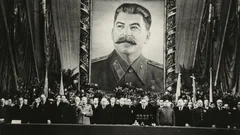
On December 1, 1949, Stalin’s 70th birthday was celebrated at the Bolshoi Theatre. Representatives of the countries called people’s democracies were in the presidium: Poland, Czechoslovakia, the recently created German Democratic Republic, Bulgaria, Romania, Hungary, Albania. Next to Stalin sat the Chairman of the People’s Republic of China, Mao Zedong. Also present in the presidium were representatives of Western European communist parties, leaders of the Communist Parties of Italy and France. Togliatti and Thorez had recently declared publicly that the peoples of Italy and France would never fight against the Soviet Union. They spoke confidently because at that time up to a quarter of voters supported the communists in those allied countries of the Soviet Union.
The 20th Congress of the CPSU Dubbing on request
In the Footsteps of the Soviet Atlantis with Yuri Yemelyanov • 2022 • 13 minutes
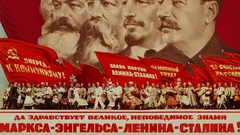
The 20th Congress of the Communist Party of the Soviet Union was scheduled to open on February 14, 1956. The agenda did not foresee anything sensational. The report was to be delivered by the First Secretary of the CPSU Central Committee, Khrushchev, and a report on the directives for the Sixth Five-Year Plan was to be given by the new Chairman of the Council of Ministers of the USSR, Bulganin, who had been in office for a year following Malenkov’s resignation.
Khrushchev: Reforms Dubbing on request
In the Footsteps of the Soviet Atlantis with Yuri Yemelyanov • 2022 • 13 minutes
Despite Khrushchev's tremendous energy and impulsiveness, many of his plans were not implemented. In January 1957, Khrushchev prepared a memorandum to the Presidium of the CPSU Central Committee proposing the restoration of the Sovnarkhozes. He argued that productivity should be increased through new methods and believed that reestablishing the councils of national economy, which had existed in the early Soviet years, would significantly activate economic activity in the country. However, behind this proposal lay another motive. Khrushchev understood very well that, in this case, the seventy leaders of the Central Committee from union republics, regions, and autonomous republics — who were represented in the Central Committee — would strongly support the initiative. They accounted for 53% of the Central Committee’s membership. Later, Gosplan Chairman Baibakov said it was a terrible blow to the Soviet economy because the production principle was destroyed, and territorial considerations were prioritized. Essentially, it was the first attempt to give local leaders control over parts of the Union’s economy. It must also be noted that they developed a taste for this control during the existence of these Sovnarkhozes.
Khrushchev: Fall Dubbing on request
In the Footsteps of the Soviet Atlantis with Yuri Yemelyanov • 2022 • 13 minutes
In January 1959, an extraordinary Congress of the CPSU was convened. In his speech, Khrushchev stated that there were currently no forces capable of restoring capitalism in our country. The restoration of capitalism was impossible, and it was impossible to split the socialist camp. Socialism had fully and finally triumphed in the USSR. Setting tasks for the Seven-Year Plan, Khrushchev declared that during this period, the socialist camp would achieve a production advantage over the capitalist world. We would have the highest standard of living. All of this was planned for 1965.
Khrushchev: On the Road to Peace Dubbing on request
In the Footsteps of the Soviet Atlantis with Yuri Yemelyanov • 2022 • 13 minutes
Khrushchev’s foreign policy was ambiguous. He frequently changed his policies. After becoming chairman in March 1958, he removed Bulganin and assumed the roles of both First Secretary of the Central Committee and Chairman of the Council of Ministers. Nikita Sergeyevich Khrushchev began making particularly outspoken statements. Any international crisis was accompanied by Khrushchev’s speeches threatening to use intercontinental rockets. This occurred when the United States and Britain sent troops to Jordan and Iraq in the summer of 1958, and Khrushchev flew to Beijing to speak with Mao Zedong about the potential destruction of the backward imperialist system, asserting that socialism had the strength to demonstrate its power to imperialism. Similar tensions arose during the Taiwan crisis in autumn 1958 and the Berlin crisis in November 1958. However, for Khrushchev, these were not just local problems — his goal was to seek a comprehensive resolution.
Shadows of the Brezhnev Era Dubbing on request
In the Footsteps of the Soviet Atlantis with Yuri Yemelyanov • 2022 • 13 minutes
On December 25, 1979, Soviet troops entered Afghanistan. Although Soviet servicemen had previously participated in various armed operations beyond the USSR, this marked the beginning of the longest war in Soviet history. From the very start of Soviet involvement, there had been good, peaceful, neighborly relations with Afghanistan. When kings still ruled the country — and after the kings were overthrown in 1974 — former Prime Minister Daoud came to power. However, in April 1978, when the Marxist People's Democratic Party seized control, the new leadership soon turned to the Soviet Union for assistance, as the government was unable to maintain power.
The Congress of Victors Dubbing on request
In the Footsteps of the Soviet Atlantis with Yuri Yemelyanov • 2022 • 13 minutes
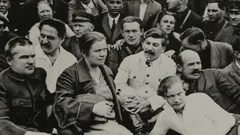
On January 26, 1934, the newspaper Pravda published an article titled “Congress of Victors” on its front page. This is how the 17th Congress of the All-Union Communist Party (Bolsheviks) came to be called. On the same day, the party’s General Secretary, Stalin, delivered the Central Committee’s report. Listing the names of the five-year construction projects — Dneprostroy, Uralmash, Kuznetskstroy, Turksib — he noted that many of the 1,913 delegates to the Congress saw themselves as victors in the great battle to transform the country. Indeed, during the years of the five-year plan, the country — long dominated by agriculture, with only 51 percent of output industrialized by 1929 — had achieved 70 percent industrial production in its gross national product. These successes were especially striking against the backdrop of the severe global crisis at the time.
The USSR at a Crossroads Dubbing on request
In the Footsteps of the Soviet Atlantis with Yuri Yemelyanov • 2022 • 13 minutes
On December 19, 1927, the 15th Congress of the All-Union Communist Party (Bolsheviks) concluded. A plenary session followed afterward. On the evening of that day, the General Secretary of the Central Committee submitted a statement: “Please relieve me of the post of General Secretary. I cannot work in this post”. The statement was not accepted and apparently had no consequences. But what provoked such a statement, such an outburst from Stalin?
Kosygin’s Reform Dubbing on request
In the Footsteps of the Soviet Atlantis with Yuri Yemelyanov • 2022 • 13 minutes
On March 29, 1966, the 23rd Congress of the Communist Party of the Soviet Union opened in the Kremlin in Moscow. By that time, many of Nikita Sergeyevich Khrushchev’s reforms had been rolled back. Local party organs, which had been split into industrial and agricultural units under his leadership, were reunified, and the Sovnarkhozes were dissolved. The Congress reaffirmed loyalty to the economic reform whose main provisions had been outlined at the September 1965 Plenum of the CPSU Central Committee. At that meeting, the Chairman of the Council of Ministers, Kosygin, delivered a report outlining the foundations of this economic reform.
The Height of the Brezhnev Era Dubbing on request
In the Footsteps of the Soviet Atlantis with Yuri Yemelyanov • 2022 • 13 minutes
On February 27, 1976, at the Congress of the Communist Party of the Soviet Union, Tyazhelnikov, First Secretary of the Komsomol Central Committee, spoke. He stated that over the past two years, 35,000 Komsomol members had been working on the construction of the Baikal–Amur Mainline, which stretches more than 4,000 kilometers across Siberia and the Far East, through taiga, permafrost, and mountains. At that time, active development of the northern and eastern regions of the country was underway. From 1971 to 1980, Siberian oil production increased tenfold. Gas production in Siberia increased fifteenfold. Chemical and petrochemical production doubled. Electricity generation doubled as well. The Sayano-Shushenskaya, Ust-Ilimskaya, and Nizhnekamskaya hydroelectric plants were built, along with the Dnieper, Inguri, and Nurek hydroelectric power plants. The country was developing successfully.
The Arrival of Gorbachev Dubbing on request
In the Footsteps of the Soviet Atlantis with Yuri Yemelyanov • 2022 • 13 minutes
On March 12, 1985, at the March Plenum of the CPSU Central Committee, Mikhail Sergeyevich Gorbachev was elected General Secretary of the Party. Six years earlier this event had been predicted in the American journal Problems of Communism, published in April 1979. The article was written by well-known US Sovietologist Jerry Hough. What struck him first was Gorbachev’s great ambition, which possibly arose in his youth.
Funerals of the General Secretaries Dubbing on request
In the Footsteps of the Soviet Atlantis with Yuri Yemelyanov • 2022 • 13 minutes
On the night of November 9–10, Leonid Ilyich Brezhnev, who was at the state dacha “Zarechye-6”, died of a sudden cardiac arrest. His death was only announced on radio and television on November 11, when the death of the General Secretary and Chairman of the Presidium of the Supreme Soviet was officially confirmed. Before the funeral on November 12, 1982, Yuri Vladimirovich Andropov was elected General Secretary of the CPSU Central Committee during the plenary session held that day.
The Last Years of Stalin Dubbing on request
In the Footsteps of the Soviet Atlantis with Yuri Yemelyanov • 2022 • 13 minutes
By 1951, the USSR had completed the Fourth Five-Year Plan. However, no law was adopted for the Fifth Five-Year Plan. The reason is that, before the war, decisions on a Five-Year Plan were always made by party congresses or conferences. Since the 18th Congress in March 1939, however, congresses were not convened. This was largely due to the deterioration of Stalin’s health; he was sometimes ill for long periods, but that was not the only reason. Stalin postponed holding such political events because he saw them becoming ritualistic and ceremonial. Development plans largely repeated previous ones, and he expected new, fresh ideas from his aides. They were brilliant executors of adopted decisions, performing well in the extraordinary circumstances of war. However, they somehow failed to develop long-term plans.
After Stalin’s Death Dubbing on request
In the Footsteps of the Soviet Atlantis with Yuri Yemelyanov • 2022 • 13 minutes
From the morning of March 6, 1953, a mournful melody sounded on Soviet radio, occasionally interrupted by the announcement of Stalin’s death. Condolences came not only from leaders of communist parties around the world but also from governments of states hostile to the Soviet Union. Yet, the greatest sorrow was among the Soviet people. Men, women, and children cried openly in the streets, corridors of institutions, and factory workshops. On March 9, a mourning rally took place on Red Square, opened by Khrushchev. Eulogies were delivered by Molotov, Beria, and Malenkov, expressing grief over Comrade Stalin’s death. Especially memorable was Lavrentiy Pavlovich Beria’s speech, delivered with a strong Georgian accent: “He who is not blind sees that our country, as never before, has rallied around the country’s leadership”.
Perestroika Dubbing on request
In the Footsteps of the Soviet Atlantis with Yuri Yemelyanov • 2022 • 13 minutes
In early 1986, the key word for the leadership’s policy was “acceleration”. Gorbachev spoke of perestroika as simply changing the mechanisms of governing the country. However, in April of that year, speaking at the Togliatti plant, he used the word “perestroika” in a broader sense, though what he meant was hard to define. It remained unclear throughout Gorbachev’s rule. Gorbachev said that perestroika would remake the country and that everything was progressing successfully. At a party conference, writer Yuri Bondarev compared perestroika to an airplane that has taken off but does not know if it has a landing strip.
Before the War Dubbing on request
In the Footsteps of the Soviet Atlantis with Yuri Yemelyanov • 2022 • 13 minutes
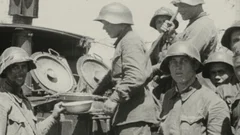
Speaking at a meeting of the Military Council on April 17, 1940, Stalin focused on the lessons of the war with Finland. He stated that until then, we had not understood what modern war truly was. Civil war is a conflict without aviation, mortars, or tanks. Small episodes like Manchuria, Lake Khasan, and Mongolia are mere trifles. The war in Poland was simply a military stroll. The cult of the Civil War hampered us; we must discard it. He went on to say that we need to increase armaments, artillery, tanks, and mortars, develop aviation, and significantly boost the production of automatic weapons.
The Molotov–Ribbentrop Pact Dubbing on request
In the Footsteps of the Soviet Atlantis with Yuri Yemelyanov • 2022 • 13 minutes
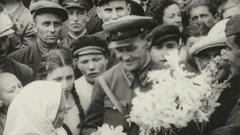
On the night of August 23–24, 1939 a Non-Aggression Pact between the Soviet Union and Germany was signed in the Kremlin, later known as the Molotov–Ribbentrop Pact. This signing followed a severe deterioration of relations with Germany over the previous six years. After Hitler came to power in 1933, he and his associates openly declared intentions to expand Germany’s living space at the expense of neighbours, including the Soviet Union. From the beginning of the fascists’ rise to power, the Soviet Union sought to create coalition blocs to encircle Nazi Germany and prevent the outbreak of war in Europe.
From Victory to the Cold War Dubbing on request
In the Footsteps of the Soviet Atlantis with Yuri Yemelyanov • 2022 • 13 minutes
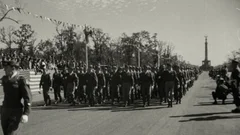
On May 9, 1945, the Soviet Union rejoiced. If a person in military uniform was seen on a city street, passersby would stop them and toss them into the air. The celebration was universal. That evening, a ceremonial salute rang out in Moscow and other cities. Soldiers returning from the front were decorated with numerous medals for liberating Soviet and foreign cities. Soviet soldiers remembered their allies: the French pilots of the Normandie-Niemen squadron, the British who risked their lives ferrying Lend-Lease supplies, demonstrating solidarity with their allies. On May 9, all central Soviet newspapers published three photographs — not only of Stalin but also of Churchill and Roosevelt. The Soviet people did not know that the leaders of these Western countries held differing views about victory and fascism.
The Formation of the USSR Dubbing on request
In the Footsteps of the Soviet Atlantis with Yuri Yemelyanov • 2022 • 13 minutes
On December 6, the British ambassador to France, Sir Francis Bertie, wrote in his diary: “There is no longer a Russia; it has disintegrated. The idol in the person of the emperor and the religion that united the Orthodox nations have vanished. If we can only secure recognition of the buffer states bordering Germany to the east — Finland, Estonia, Poland, Ukraine — the rest can go to hell and stew in its own juice”. Bertie listed all the political entities that had appeared on the territory of the disintegrated empire. These regimes were supported by German forces, Turkey, or the Entente. Wars were raging there. However, the situation changed quickly, and by early 1919, most of those buffer republics had seen Austrian and German occupiers leave and Soviet power established.
The 1936 Constitution Dubbing on request
In the Footsteps of the Soviet Atlantis with Yuri Yemelyanov • 2022 • 13 minutes
The year 1936 was marked by preparations for the USSR Constitution. On March 1, 1936, Stalin spoke with Roy Howard, a representative of the E.W. Scripps Company, and told him that this would be the most democratic constitution in the world. At that time, very few states had democratic institutions. In countries across Europe, Asia, the Americas, and especially Africa, non-democratic regimes prevailed — military dictatorships, authoritarian rulers, or autocratic monarchs. Even in democratic countries, democracy was far from perfect.